Eight years passed, but Elena never learned how to live without searching.
She could still see it clearly—the sun-washed boardwalk in Puerto Vallarta, the music spilling from beach cafés, the salty air clinging to her skin. Sofía had been ten years old, bright and restless in her yellow embroidered dress, braids swinging as she laughed. Elena had turned away for seconds—just long enough to reach for her hat. When she turned back, the space beside her was empty.
At first, denial carried her. Children wandered everywhere. Sofía had to be nearby. But minutes stretched into terror. Lifeguards searched the shoreline. Police sealed off the area. Announcements echoed through loudspeakers. The ocean, calm and indifferent, gave nothing back. No shoe. No doll. No trace.
Days dissolved into weeks of posters, false sightings, and sleepless nights. Some said the sea had taken her. Others hinted at something worse. Security footage led nowhere. Eventually, Elena returned to Mexico City carrying a grief so heavy it reshaped her life. Her husband never recovered. Three years later, she lost him too.
Elena survived by refusing to let go.
She kept her small bakery running in Roma Norte, kneading dough with hands that remembered tying braids and packing lunches. Customers called her strong. She never corrected them. Strength wasn’t what kept her standing—hope did.
Then, on an ordinary April morning, everything changed.
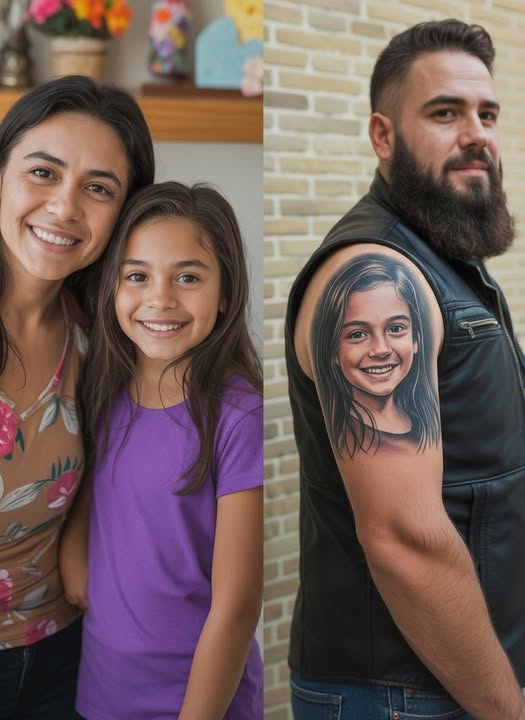
A dusty pickup stopped outside the bakery. A few young men came in for bread and water. Elena barely noticed them until her eyes caught something that froze her breath.
A tattoo.

Don’t stop now — a single image would reopen an eight-year-old wound