The video spread rapidly across social media platforms, drawing millions of views and prompting responses from state and federal officials, lawmakers, and community leaders. What began as online scrutiny quickly escalated into formal investigations, a temporary federal funding pause, and broader discussions about accountability, misinformation, and public trust.
The Video and Initial Claims
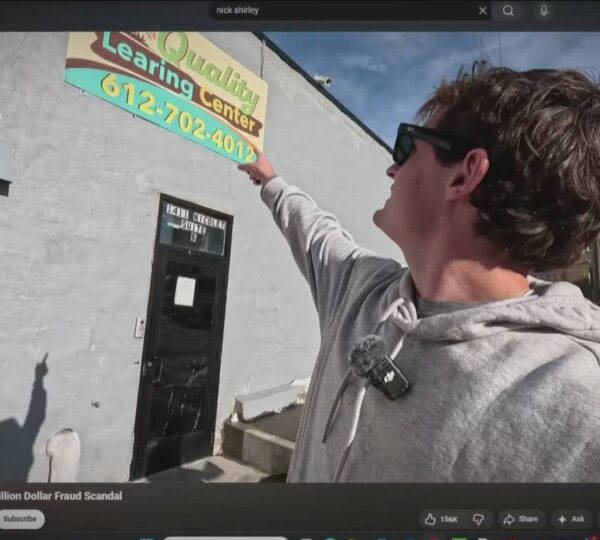
Shirley released the video on December 26, documenting visits to multiple childcare facilities licensed to receive CCAP payments. CCAP is a federally supported, state-administered program designed to help low-income families afford childcare by subsidizing provider fees.
In the footage, Shirley filmed buildings displaying daycare signage but showing locked doors, empty parking lots, or no visible children. He cited publicly available payment data indicating that some of the facilities had received significant CCAP funding over time, questioning whether taxpayer dollars were being properly monitored.
The video gained traction after being reshared by prominent political figures and commentators, extending its reach far beyond Minnesota and fueling nationwide debate over government oversight.
Political and Public Reaction
The video prompted swift responses from Republican lawmakers, including calls for accountability from Governor Tim Walz’s administration. Critics argued that the footage raised concerns about regulatory oversight and demanded explanations for how funding decisions were being made.
Others urged caution, noting that short, unscheduled visits do not provide sufficient evidence of wrongdoing. They emphasized that childcare centers often operate on varying schedules and that absence of activity at a single moment does not necessarily indicate fraud or non-operation.
State and Federal Agency Responses
In response to the controversy, the Minnesota Department of Children, Youth and Families (DCYF) confirmed it conducted follow-up inspections of the facilities highlighted in the video. Officials stated that the centers had been inspected as part of routine licensing procedures within the previous months and that additional spot checks were performed due to public concern.
According to the agency, most of the facilities were found to be operating normally during official inspections, with children and staff present. Two locations shown in the video were confirmed to be closed and were not receiving CCAP funds at the time.
DCYF officials said they did not uncover evidence of criminal fraud related to the centers featured in the video, though some facilities had unrelated regulatory issues, such as documentation or administrative compliance concerns.
At the federal level, the U.S. Department of Health and Human Services temporarily paused certain childcare payments to Minnesota while requesting additional documentation to verify compliance. Federal officials clarified that the pause was precautionary and did not indicate that fraud had been established.
Agencies including the FBI acknowledged they were reviewing information related to the situation but did not announce findings of wrongdoing connected to the specific centers shown in the footage.
Broader Debate and Community Impact
As the story evolved, it expanded beyond childcare oversight into wider political and social discussions. Some advocates raised concerns that the video disproportionately focused on childcare centers owned by members of Minnesota’s Somali American community, warning against assumptions based on limited visual evidence.
Several childcare providers reported receiving harassment following the video’s circulation, prompting calls from civil rights groups for responsible discourse and careful distinction between investigation and presumption of guilt.
Independent media reviews of state licensing data confirmed that many of the centers remained in good standing and had passed recent inspections, reinforcing the view that viral content may not always reflect the full regulatory picture.
Governor Walz’s Response
Governor Tim Walz addressed the backlash by emphasizing the importance of accountability while cautioning against conclusions drawn from incomplete information. He reaffirmed his administration’s commitment to program integrity, transparency, and cooperation with federal authorities.
Walz also underscored the need to protect families who rely on childcare assistance and providers who operate lawfully, noting that investigations should be driven by verified evidence rather than online speculation.
Ongoing Review and Lessons Learned
The situation remains under review as state and federal agencies continue to assess compliance and oversight practices. While questions about safeguarding public funds are ongoing, official inspections have so far not substantiated widespread fraud related to the centers shown in the viral video.
The episode highlights the influence of social media in shaping public perception, the importance of thorough investigation, and the need for context when evaluating complex public programs.
As Minnesota moves forward, the controversy serves as a reminder that transparency, accuracy, and responsible communication are essential to maintaining public trust in government-funded services.