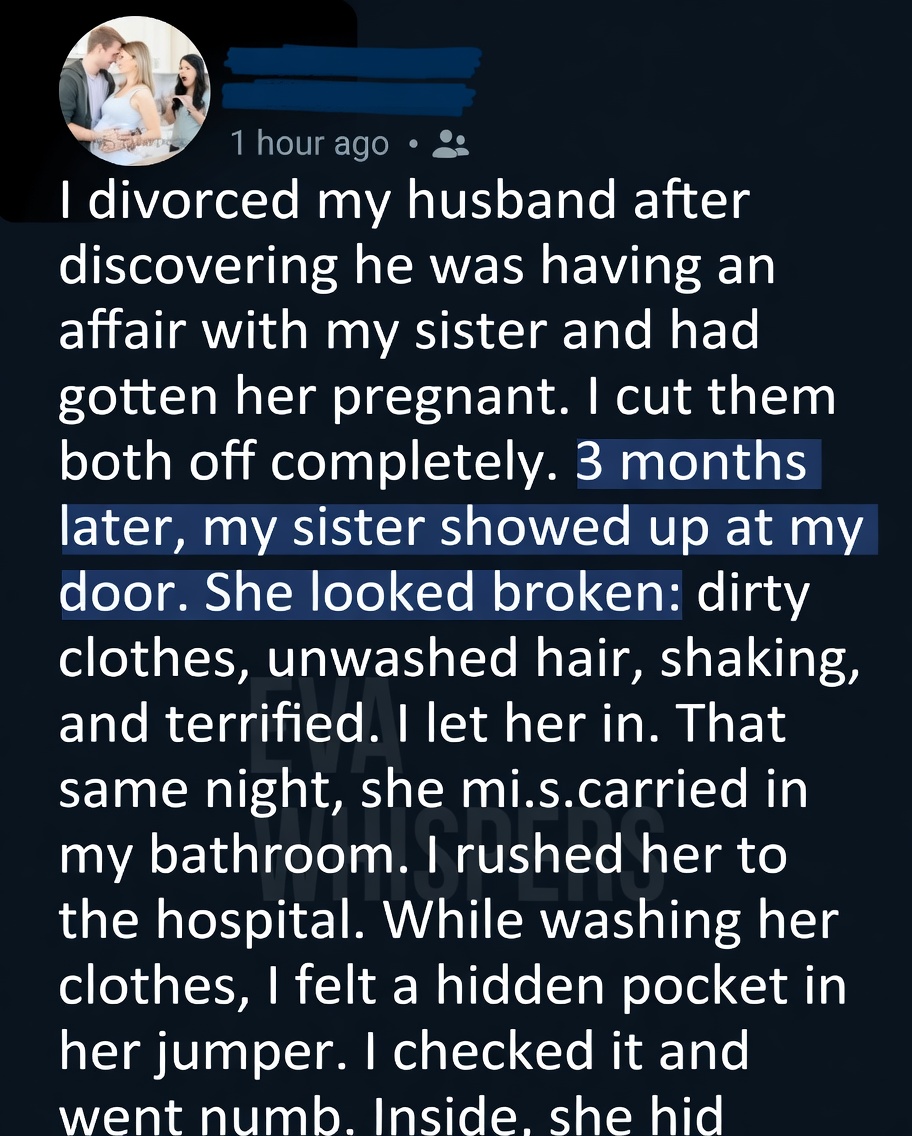
Every instinct told me to close the door. Instead, I stepped aside and let her in.
She barely spoke. She sat quietly in the living room, holding her stomach, looking lost. There were no excuses, no long explanations—just fear and exhaustion.
Around midnight, I heard a cry from the bathroom.
When I reached her, she had collapsed on the floor. She kept repeating the same words through tears.
“I’m sorry… I’m so sorry.”
There was no time to think about the past. I grabbed towels, my keys, and rushed her to the hospital. I stayed through the long hours, answering questions, filling out paperwork, and waiting beside her.
The doctors eventually confirmed what we feared.
She had lost the baby.
Later that night, while gathering her things to wash them, I found something unexpected. Inside a small stitched pocket in her sweater was a velvet pouch.
Inside the pouch was a delicate silver baby bracelet with a tiny pink charm.
Engraved on it was a single name.
Angela.
My name.
She had planned to name her daughter after me.
In that moment, the story I had been telling myself began to crack. Yes, my sister had hurt me deeply. But I also began to see the bigger picture. My husband had pursued her, promised stability, and then walked away when things became complicated.
In the end, he hadn’t just broken my trust.
He had left both of us to deal with the consequences.
The next morning, I returned to the hospital. My sister looked smaller than I’d ever seen her—fragile and quiet.
“You don’t have to stay,” she said softly. “I know you probably hate me.”
I didn’t answer with words.
I just hugged her.
At first she stiffened in surprise, then she broke down crying, like the little sister who used to run to me after a bad dream when we were kids.
Forgiveness didn’t happen all at once. It was a choice I made slowly, day by day. I realized that holding onto bitterness would only allow someone else’s mistakes to destroy our family completely.
So I chose something different.
When she was discharged, I brought her home.
The children didn’t fully understand what had happened, but children often show more grace than adults. Slowly, things began to heal. She became “Auntie” again—reading bedtime stories, helping with homework, cheering at soccer games.
She never asked for forgiveness. She simply tried to be present and supportive.
Over time, the heavy tension in our home faded. Life grew quieter, steadier. My former husband now exists mostly in legal paperwork and scheduled visits. He no longer has the power to shape our lives.
What I learned through all of this surprised me.
Revenge would have been easy. Staying angry would have been understandable. But choosing compassion rebuilt something stronger.
My sister lost her child.
I lost my marriage.
But we didn’t lose each other.
And in the end, that made all the difference.
What would you have done in this situation? Share your thoughts in the comments and join the conversation—your perspective might help someone facing a similar moment in their life.