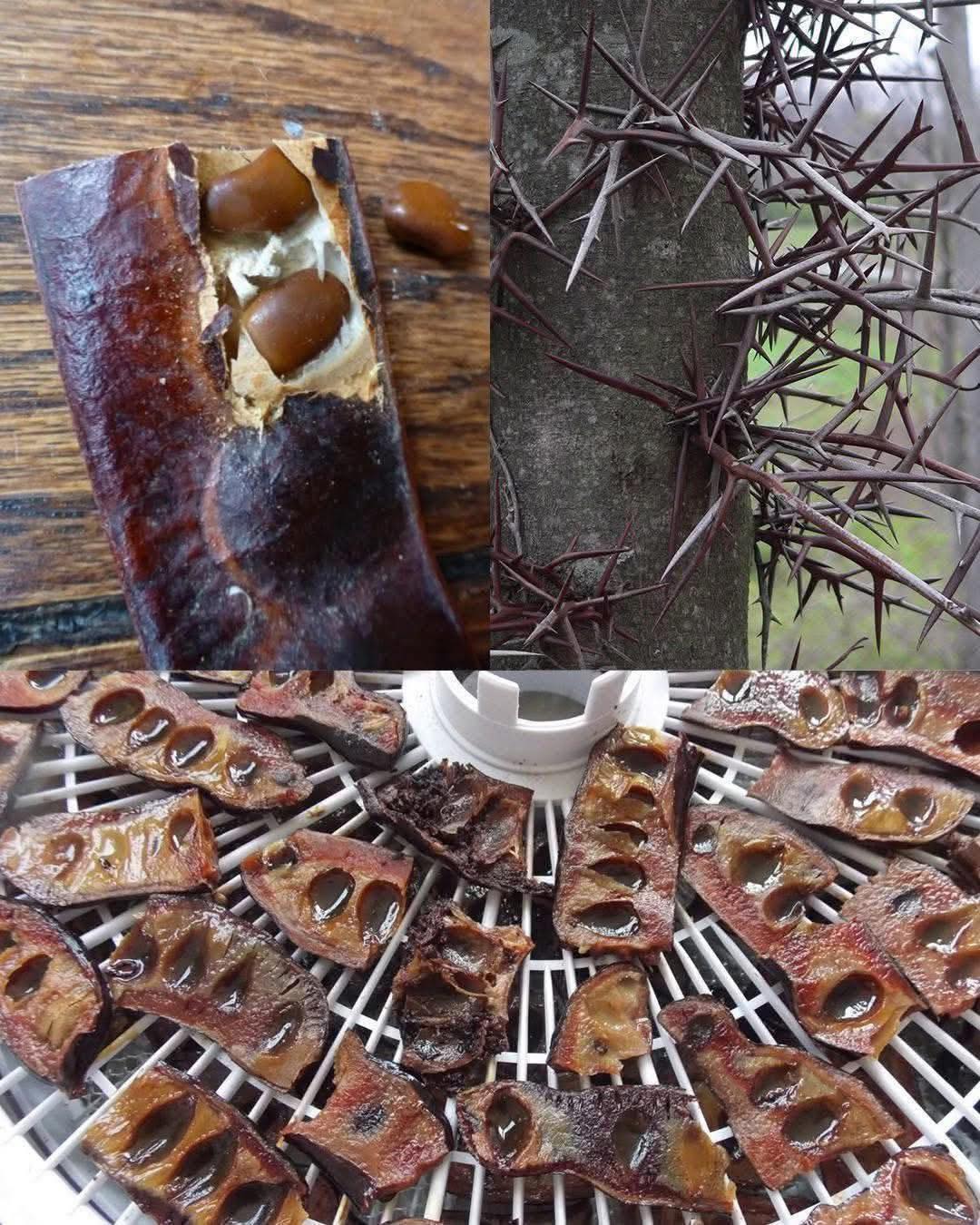
Even everyday household uses weren’t off-limits. The bark and pods contain compounds that create a mild lather when mixed with water, historically used as a natural cleaner or soap. Though uncommon today, these practices highlight how communities once relied on nature for practical solutions.
Environmentally, the honey locust shines as well. Its ability to enrich soil, provide light-filtering shade, and offer food and shelter for wildlife makes it a valuable addition to any ecosystem. Bees flock to its fragrant flowers, supporting local pollination and biodiversity.
Caution is key, however. Not all parts of the tree are safe to eat, and its large thorns can cause serious injury if mishandled. Knowledge and care are essential when interacting with this versatile tree.
From sweet pods to strong timber and ecological benefits, the honey locust is a quiet powerhouse hiding in plain sight. It’s a reminder that nature often holds its most valuable gifts where we least expect them—waiting to be rediscovered and appreciated.
Have you ever used or explored the honey locust tree? Share your experiences and tips for rediscovering nature’s hidden treasures!