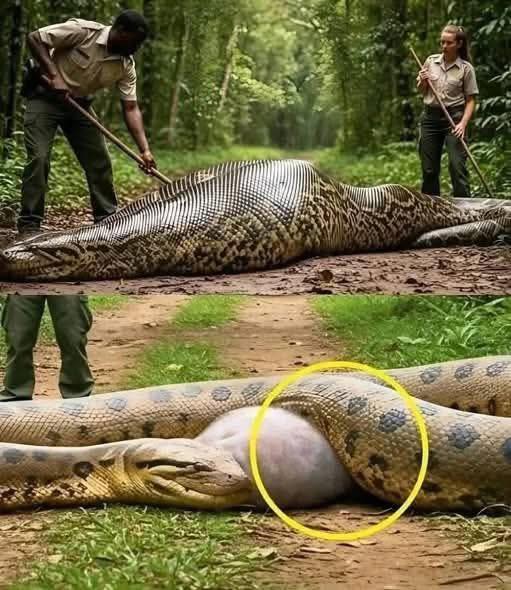
Deep inside a remote South American wetland, where thick humidity hangs in the air and wildlife thrives beyond human reach, a routine patrol turned into an urgent rescue mission.
A team of park rangers conducting a biodiversity check came across something unusual—a massive Green anaconda lying motionless across a partially submerged log. Known as one of the most powerful predators in the wild, this snake didn’t look strong or alert. Instead, it appeared weak, struggling, and dangerously close to collapse.
A Disturbing Discovery
As the rangers approached, they noticed something alarming. The snake’s midsection was unnaturally swollen, with a rigid shape that didn’t resemble any typical prey.
This wasn’t a normal feeding situation.
The anaconda had swallowed something it couldn’t digest—a foreign object likely mistaken for food. For a predator that relies on movement and heat detection, even debris can trigger a strike if it mimics life.
Continue reading…