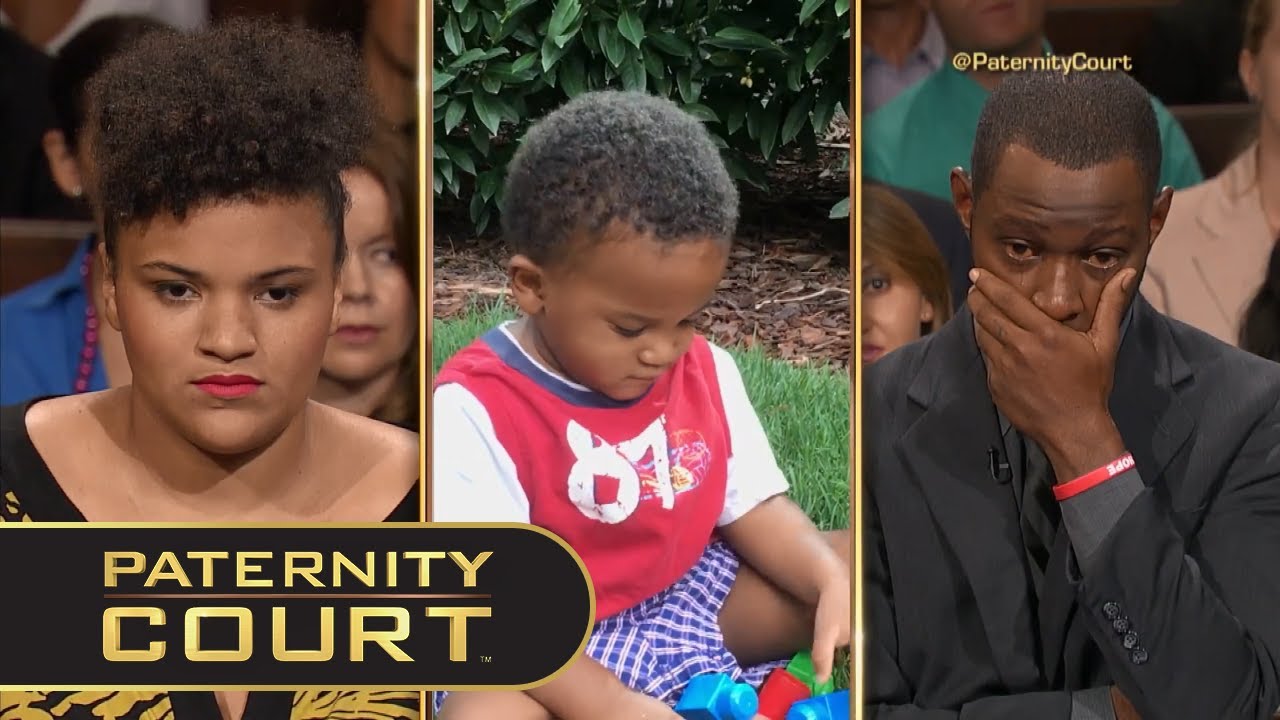
In court, she shared her experience with visible emotion, describing the challenges of raising a child alone while dealing with rejection and uncertainty. She explained how she had trusted her partner to stand by her, only to be left to carry the responsibility on her own when it mattered most.
“I just wanted him to do right by his child,” she said. “That’s all I’ve ever asked.”
The man, however, maintained his doubts. He argued that uncertainty in their relationship made him question whether he was truly the father. While he acknowledged the seriousness of the situation, he resisted taking responsibility without definitive proof.
The case highlighted a difficult reality: when paternity is disputed, the consequences go far beyond legal paperwork. They affect stability, emotional well-being, and a child’s future.
As tensions rose, the judge ordered a DNA test to establish the truth. For both sides, the results carried enormous weight—not just financially, but personally.
When the results were revealed, they confirmed that the man was indeed the biological father.
While this brought clarity, it did not erase the hardship the mother and child had already endured. The years of uncertainty, emotional strain, and financial struggle could not simply be undone. Even with the legal outcome, rebuilding stability would take time.
The case serves as a powerful reminder of how critical accountability is in family situations. While legal systems can determine facts, they cannot fully repair the emotional impact left behind.
At its core, this story is about resilience. Despite facing overwhelming challenges, the mother continued to fight for her child’s future—seeking not just support, but recognition and responsibility.
FULL VIDEO:
What are your thoughts—should stronger measures be in place to prevent situations like this? Share your perspective and join the conversation below.