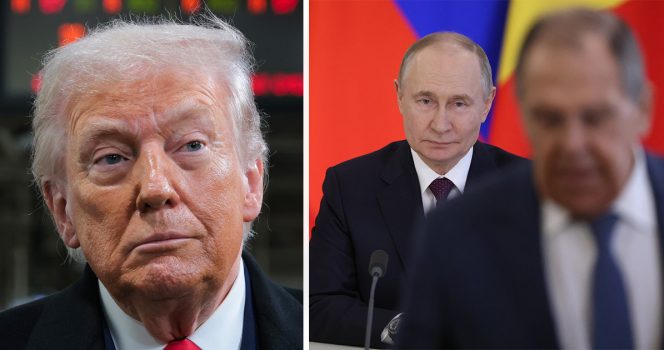
U.S.-Europe Tensions Over Greenland
In response to Trump’s remarks, the administration announced plans to impose a 10 percent tariff on goods from Denmark, Norway, Sweden, France, the United Kingdom, the Netherlands, and Finland, starting February 1. The White House indicated that tariffs could rise to 25 percent if no resolution is reached by June 1.
European leaders have pushed back, defending Greenland’s status and warning that retaliatory measures could be considered if the tariffs are implemented. Trump traveled to the World Economic Forum in Davos, Switzerland, where he stated that Greenland is “imperative for national and world security” and emphasized that there is “no going back” on his position.
Russia Comments on Greenland
Russian Foreign Minister Sergei Lavrov addressed the issue during a press conference in Moscow. He noted that Greenland was “not a natural part” of Denmark and described it as a former colonial territory. Lavrov also stressed that Russia has no intention of interfering in Greenland’s affairs.
“In principle, Greenland is not a natural part of Denmark, is it?” Lavrov said. “It was neither a natural part of Norway nor a natural part of Denmark. It is a colonial conquest. The fact that the inhabitants are now accustomed to it and feel comfortable is another matter.”
Lavrov’s comments come as European nations continue to coordinate their response to U.S. pressure, emphasizing diplomacy and sovereignty. Danish officials have stated that there is no significant threat from Russia or China in the region, reinforcing Greenland’s current status.
Outlook
The situation highlights ongoing tensions over Arctic security and international relations. While the United States frames Greenland as strategically important, European and Russian officials stress that the territory’s current governance and sovereignty remain established. Analysts suggest that diplomacy and dialogue will be key to preventing further escalation.