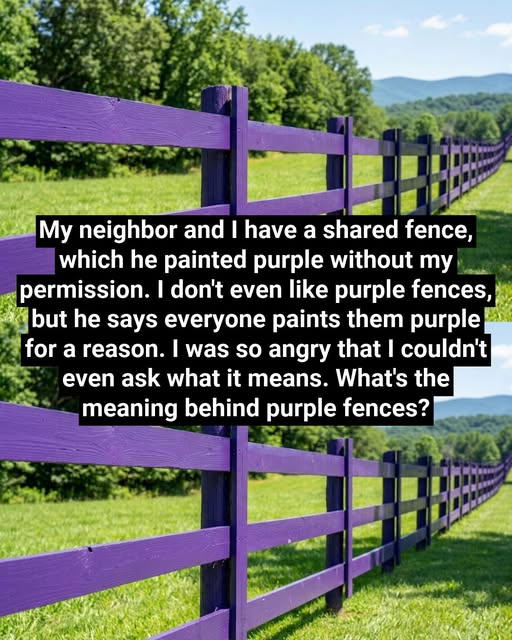
At first glance, it seems completely harmless—a streak of purple on a fence post, a stripe on a tree trunk. Faded, fresh, subtle—it could easily be mistaken for a decorative touch, a random splash of color, or even an artistic flourish. But in many parts of the United States, that purple mark carries a very specific, legally recognized message: Do not cross.
It’s not there for decoration. It’s not there to be ignored. That purple stripe is a boundary warning, and understanding its meaning could save you from serious trouble.
Landowners, especially those with large or rural properties, often struggle to maintain traditional “No Trespassing” signs. Signs fall down. Weather erodes them. They get stolen or simply fade until they’re invisible. Paint, however, lasts—and that’s where the purple comes in.
Many states have adopted what are commonly called purple paint laws, allowing property owners to mark boundaries with carefully applied stripes. These markings carry the same legal authority as a posted sign. Cross a properly marked boundary, and you can no longer claim you didn’t know you were entering private property.
But it’s not just about painting a tree randomly. The paint must be applied according to strict guidelines. Vertical stripes—usually an inch wide and several inches long—are placed at eye-catching heights, generally three to five feet off the ground. They’re repeated at regular intervals, often every hundred feet or so, ensuring anyone walking along the boundary sees the warning clearly.
Continue reading on next page…