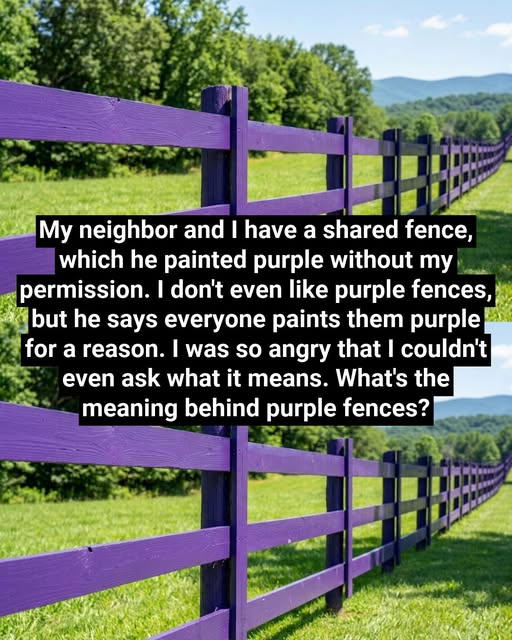
The choice of purple is deliberate. It’s rare in nature, so it stands out against trees, grass, and dirt. It’s instantly noticeable and doesn’t blend into the surroundings. Unlike paper or metal signs, paint isn’t susceptible to wind, nails, or fasteners coming loose. Even when it fades, it leaves a trace that can easily be refreshed.
But here’s the tricky part: not every state recognizes purple paint legally. Some give it full authority, equating it to posted “No Trespassing” signs. Others accept it only under certain conditions. And in some places, the law doesn’t recognize it at all. This inconsistency means that hikers or explorers can’t assume that a purple mark always carries the same weight—they must stay alert and informed.
For landowners, purple paint is a practical tool to assert control over their property. For visitors, it’s a silent signal: boundaries exist even when signs are absent. That single streak of color communicates directly, without words, literacy, or guesswork.
Beyond legality, it’s a fascinating reflection of how private property and public access intersect. Trails wind through open fields, forests blur into neighboring land, and what looks like free space may actually be protected. Purple paint cuts through that ambiguity, making invisible boundaries visible and clear.
Next time you see a streak of purple on a tree or fence, don’t dismiss it as decoration. It’s not meant to catch your eye—it’s meant to stop you. Step beyond it, and you’ve crossed into someone else’s territory, and the consequences can be real.
Have you ever come across a purple boundary marker while hiking or exploring? Share your experience in the comments below and help others stay aware of these quiet but powerful warnings.