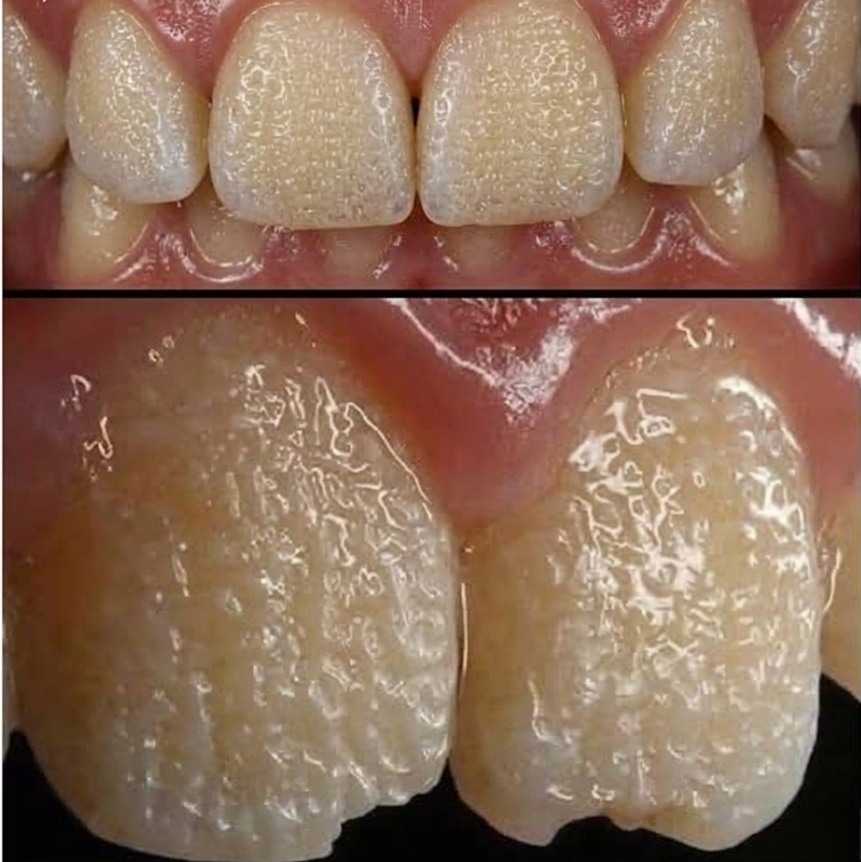
- Yellow, brown, gray, or chalky white teeth
- Small, uneven, or grooved surfaces
- Chipping, crumbling, or rapid enamel wear
- Sensitivity to hot, cold, sweet, or acidic foods
Both baby and permanent teeth can be affected, often making AI noticeable in early childhood. Early recognition is critical to protecting enamel and preventing further damage.
Emotional and Social Impact
Beyond physical discomfort, AI can affect confidence. Children and adults may feel self-conscious about their smiles, anxious in social situations, or embarrassed while eating. Ongoing dental treatments and discomfort can add stress, making AI a challenge that touches both physical and emotional well-being.
Types of Amelogenesis Imperfecta
- Hypoplastic AI: Hard enamel but too thin, leading to uneven or pitted teeth.
- Hypomaturation AI: Enamel of normal thickness but softer than usual, prone to chipping.
- Hypocalcified AI: Soft, poorly mineralized enamel that wears away quickly.
Despite differences, all types share the same challenge: enamel that doesn’t fully protect teeth.
Diagnosis and Treatment
Dentists diagnose AI by examining enamel appearance, sensitivity history, family history, and wear patterns. X-rays, photos, and sometimes genetic testing help differentiate AI from other causes like erosion or grinding.
While AI cannot be reversed, modern dentistry offers solutions to reduce pain, protect teeth, and maintain function. Options include crowns, bonding, veneers, fluoride treatments, and desensitizing products. Regular checkups are essential for long-term care.
Living Confidently With AI
A diagnosis of Amelogenesis Imperfecta doesn’t define a smile or self-worth. With early intervention, consistent care, and understanding, people with AI can maintain healthy, functional teeth and live confidently. Knowledge and proactive dental care transform a challenging condition into a manageable one.
💬 Have you or someone you know experienced AI? Share your story or tips in the comments below—your insights could help others navigate this condition with confidence!