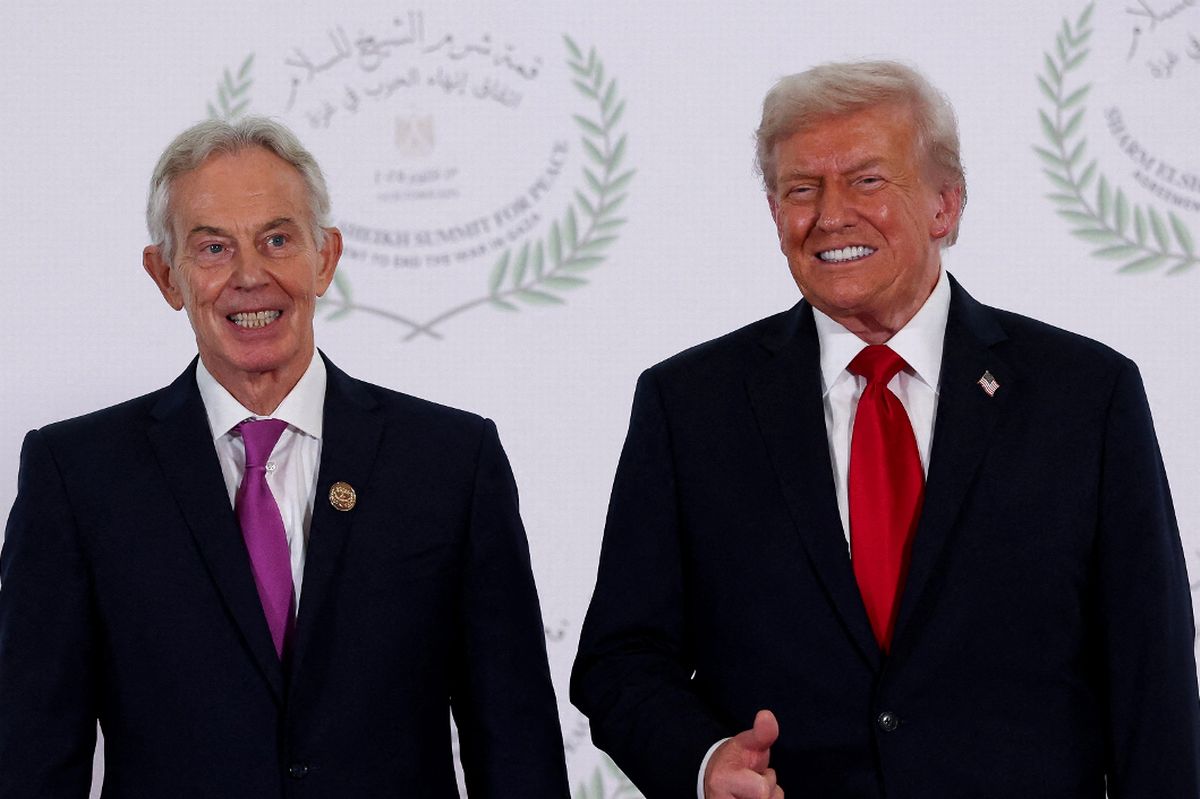
Why Trump Is Pursuing a New Global Body
Observers have pointed to Trump’s long-standing skepticism toward multinational institutions as a key driver behind the initiative. Trump has repeatedly criticized the UN during both his presidency and his subsequent political career, often portraying it as ineffective, politically biased, or dismissive of his leadership.
According to political analysts, Trump’s interest in international peace initiatives intensified after he became involved in diplomatic discussions surrounding Ukraine and Gaza. Early proposals reportedly focused on ceasefires and rebuilding efforts in Gaza, but the scope of the organization later expanded into a broader global forum.
Trump’s strained relationship with the United Nations has also been shaped by personal grievances. During a past UN General Assembly visit, technical difficulties reportedly disrupted his appearance—an experience allies say reinforced his belief that the institution is hostile toward him.
Tony Blair’s Role Raises Questions
Tony Blair’s involvement has drawn particular attention. The former Labour leader has a long history of participating in international conflict-resolution efforts, especially in the Middle East, and maintains relationships with senior political figures across party lines.
Blair is also known to have longstanding ties with Jared Kushner, Trump’s son-in-law and former senior adviser, with whom he reportedly discussed Gaza reconstruction plans well before Trump announced the Board of Peace.
While many expected Blair to distance himself from controversial proposals—such as Trump’s suggestion to redevelop Gaza as a large-scale tourist destination—he has continued to appear alongside the initiative’s leadership.
At the organization’s launch event in Davos, Blair was seated prominently and was listed as a member of its executive board, even as the UK government opted not to formally participate.
Who Has Joined the Alliance?
Trump unveiled the Board of Peace’s founding members at the event, standing before a logo resembling the UN emblem but redesigned with a distinctly American-centric aesthetic.
Representatives from around 20 countries attended, including Hungary, Argentina, Turkey, Saudi Arabia, the UAE, Qatar, Jordan, Azerbaijan, Armenia, Pakistan, Indonesia, and others across Europe, Asia, and the Middle East.
Human rights organizations have noted that many participating countries face criticism over political freedoms. According to Freedom House assessments, only a small number of the member states are classified as fully free, with others rated as partly free or not free due to limits on civil liberties, media independence, or political opposition.
Israel has reportedly agreed to participate, though Prime Minister Benjamin Netanyahu did not attend the European launch event.
A Parallel Power Structure?
Critics argue that the Board of Peace risks functioning as a parallel international system—one centered more on political alignment than on democratic norms or multilateral accountability. Some analysts suggest the initiative reflects Trump’s broader discomfort with term limits and institutional constraints.
Trump has repeatedly expressed frustration with the temporary nature of elected office and has hinted that international leadership roles could allow him to maintain global influence regardless of domestic political outcomes.
Supporters of the initiative argue that existing global institutions have failed to prevent conflict and that alternative forums deserve a chance. Detractors counter that replacing inclusive multilateral systems with leader-driven alliances could weaken international cooperation rather than strengthen it.
Conclusion
Whether the Board of Peace becomes a lasting global institution or a short-lived political experiment remains unclear. What is certain is that its formation—and Tony Blair’s involvement—has sparked debate about leadership, legitimacy, and the future of global governance.
As geopolitical tensions persist worldwide, the question facing the international community is not just who leads peace initiatives, but how those initiatives are structured—and whether they serve shared global interests or individual ambitions.