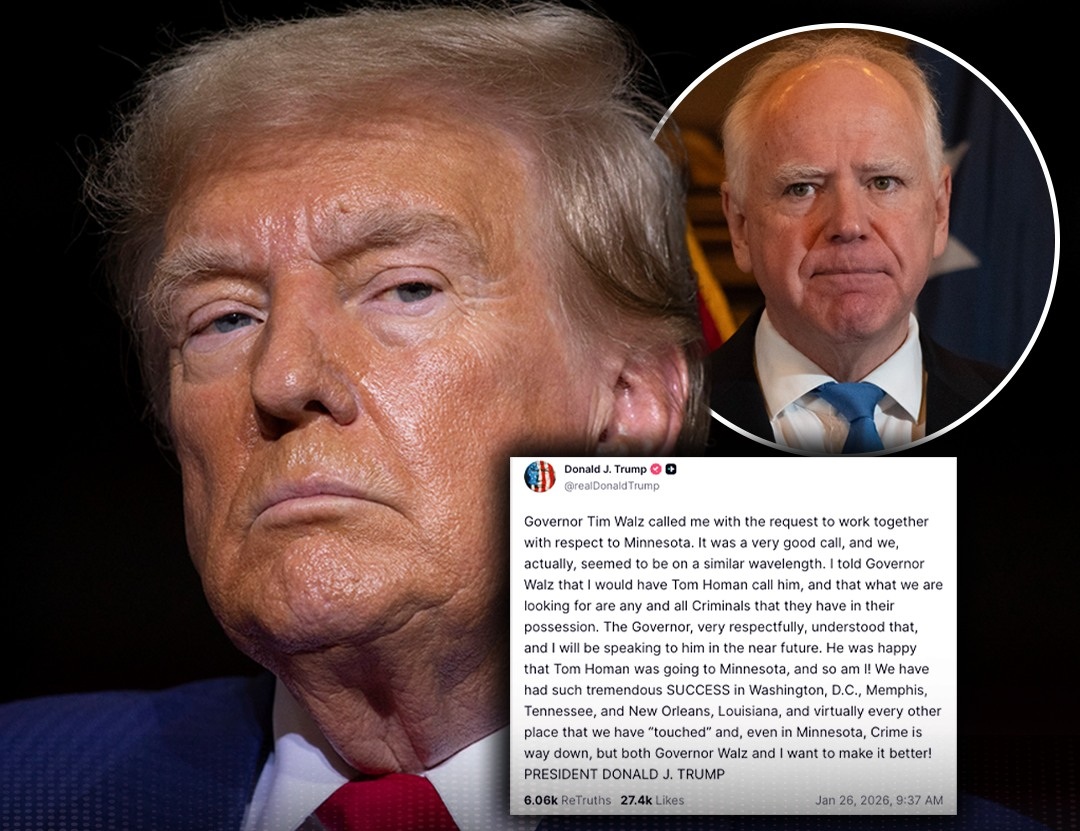
Key Points From the Call
According to statements from both sides:
- Trump posted on his social network that the call was “very good” and that he and Walz seemed to be “on a similar wavelength” as they discussed coordination around federal operations in Minnesota.
- Walz’s office confirmed the call and described it as productive, noting that the governor emphasized the need for impartial investigations into the recent shootings by federal agents.
- Walz also urged the president to consider reducing the number of federal immigration enforcement agents in Minnesota, a point Trump agreed to review with his Department of Homeland Security.
- Trump said he would have White House border official Tom Homan contact Walz to continue the discussion on enforcement and public safety.
The exchange marked a notable shift in tone. Walz and Trump, who have been political rivals, had previously disagreed sharply on federal immigration strategy in the state.
What Leaders Are Focusing On
Walz reportedly pressed for independent reviews of the deadly encounters involving federal agents. He also highlighted the role of the Minnesota Bureau of Criminal Apprehension and stressed that state law enforcement should be able to conduct impartial investigations, as is customary for serious incidents.
Trump’s comments emphasized cooperation while underscoring a focus on public safety. In his post, he referenced sending Homan to Minnesota and spoke in general terms about identifying people accused of criminal activity in the state’s custody.
Broader Context
The phone call follows weeks of heightened tension in Minnesota related to federal immigration enforcement operations known as Operation Metro Surge. The efforts have drawn protests and raised questions about federal-local coordination. A judge is currently reviewing arguments over whether to limit or halt the immigration enforcement strategy in Minnesota.
Federal authorities, state leaders, and local officials continue to navigate a complex situation involving public safety, community response, and legal oversight as they work toward de-escalation and clearer protocols.