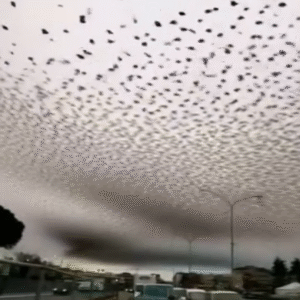
Every winter, the skies above Rome come alive in a spectacle so mesmerizing that travelers and locals alike pause in awe. Millions of starlings take to the air, gathering in enormous, twisting flocks that dance and swirl with uncanny precision. This phenomenon, known as a murmuration, is nature’s own aerial performance—dynamic, unpredictable, and utterly captivating.
As the sun dips behind Rome’s iconic skyline, these feathered dancers begin to gather. From rooftops, piazzas, and bridges, the birds assemble in staggering numbers. At first, it’s a ripple of movement—a subtle shimmer in the fading light. Then, as more starlings join the flock, the sky transforms into a living canvas. Shapes form and dissolve in an instant: waves, spirals, vortexes, and tunnels of synchronized motion that shift with astonishing speed. Observers often hold their breath, mesmerized by patterns that feel choreographed by some unseen maestro.
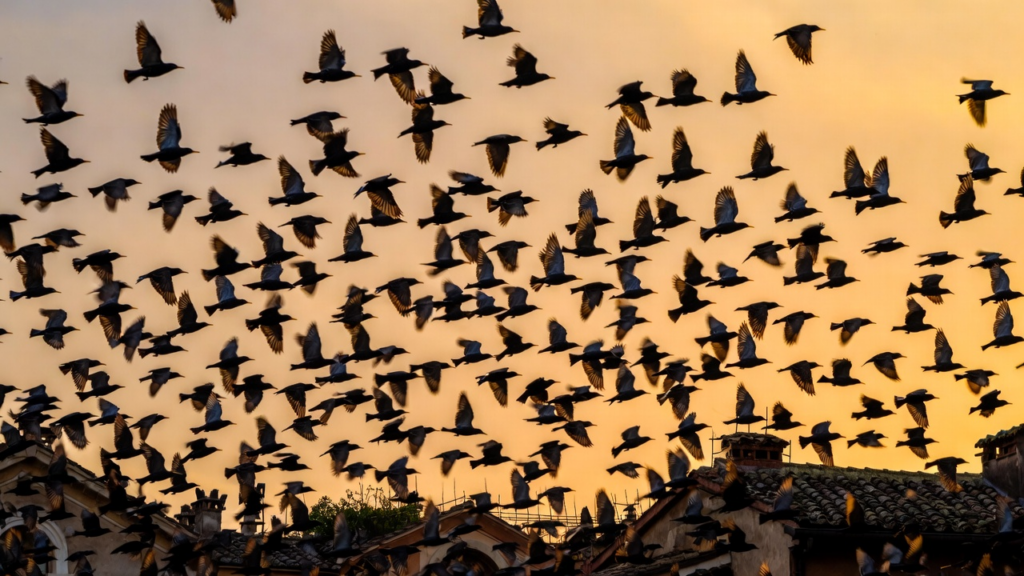
Tourists from across the globe flock to witness the spectacle. Cameras flash, drones hover cautiously above rooftops, and groups of onlookers line the Tiber River or cluster near historic monuments, pointing skyward. Guides whisper about the birds’ incredible coordination, explaining how each individual reacts to the movements of its nearest neighbors, creating a ripple effect that allows the flock to move as a single, cohesive entity. For many visitors, it’s a bucket-list experience—a natural performance rivaling any man-made show.
Continue reading on next page…