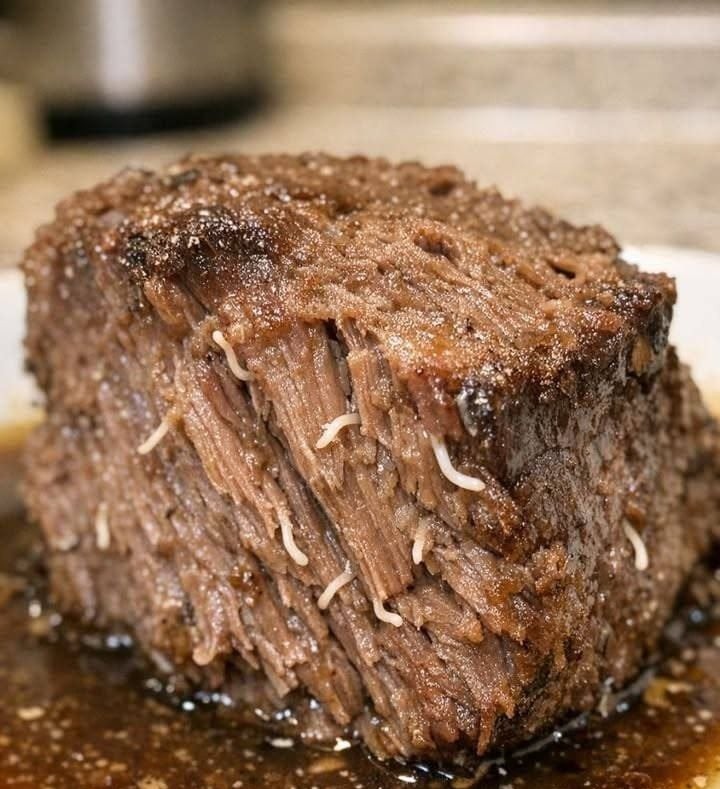
If you’ve ever pulled apart a slow-cooked beef roast and noticed thin, pale, string-like strands running through the meat, you’re definitely not alone. It’s a moment that often makes people pause and wonder what they’re actually seeing.
The reassuring answer is simple: in most cases, those strands are completely natural and expected.
Beef is made up not only of muscle fibers but also of connective tissue, a structural material that helps hold everything together while the animal is alive. One of the main components of this tissue is collagen. On its own, collagen is firm and a bit tough, which is why certain cuts of beef can feel chewy if cooked quickly.
Slow cooking changes everything.
When beef is cooked gently over a long period, the collagen gradually breaks down. Instead of staying rigid, it softens and transforms into a rich, tender, almost silky texture that blends into the meat. During this process, it can appear as white or pale strands, especially when you’re shredding or pulling the beef apart.
Far from being something unusual, this transformation is actually a key reason slow-cooked beef is so flavorful and tender. Those “white strands” are simply collagen doing its job under heat and time.
Keep reading…