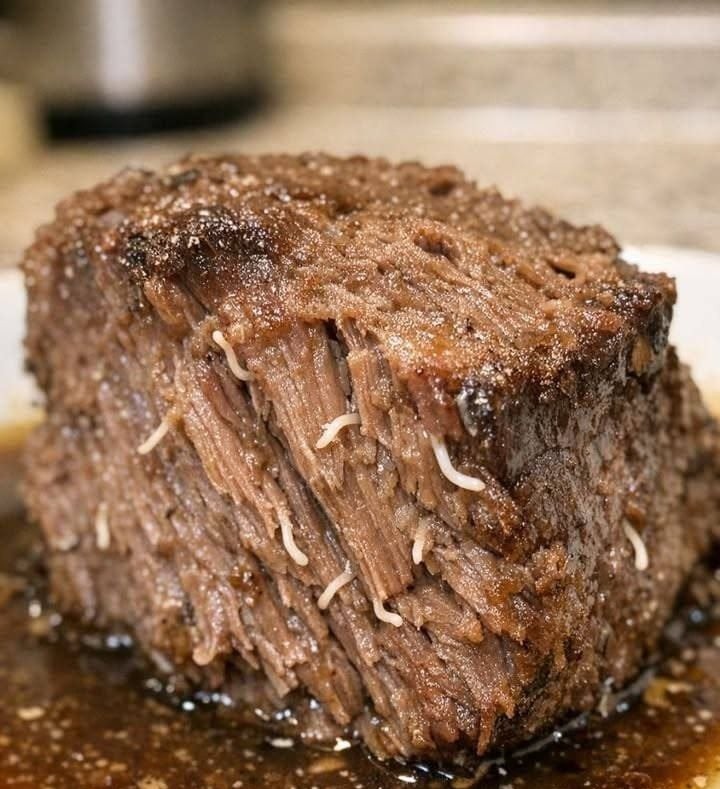
At first glance, the texture might look unfamiliar, but it’s a normal part of how the meat changes during cooking. When beef is properly prepared, these connective tissues don’t signal a problem—they signal that the meat has broken down correctly and become easier to eat.
It’s also important to separate natural food texture from food safety concerns. In properly handled and fully cooked beef, these visible strands are not harmful. They are part of the meat’s structure, not a contaminant. Safe cooking temperatures and proper preparation ensure the dish is both enjoyable and safe to eat.
In other words, if your beef smells normal, was stored correctly, and has been cooked thoroughly, what you’re seeing is simply the natural result of heat transforming tough fibers into tender meat.
What may look strange at first is actually a sign of good cooking technique at work.
So the next time you notice those pale strands while shredding a roast, you can think of them not as something unusual, but as evidence of collagen breaking down exactly as it should—turning a tough cut into something soft, rich, and satisfying.
Have you ever noticed this while cooking slow-roasted beef? Share your experience below and join the conversation—your kitchen moments might help someone else understand theirs better.