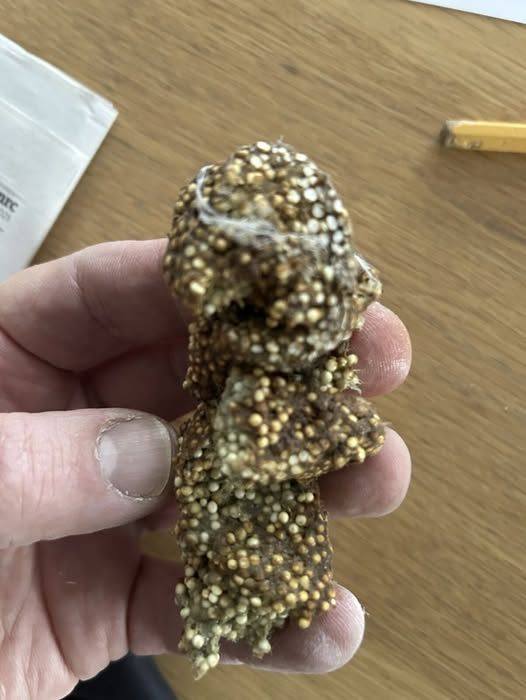
Floam.
A forgotten piece of childhood had been sitting under that shelf like a tiny time capsule from the late 1990s.
What Was Floam?
For anyone who missed that very specific era of messy childhood toys, Floam was one of those strange products that felt magical if you were a kid.
It was a colorful, moldable putty packed with tiny foam beads. It looked like slime’s crunchier cousin and felt like someone had mixed craft supplies, packing peanuts, and pure chaos into one container.
Floam was popular in the late 1990s and was often connected with the messy, colorful energy kids associated with Nickelodeon-style fun. It came in bright colors, stuck to things it probably should not have stuck to, and gave children endless reasons to cover tables, toys, and carpets with tiny foam beads.
To kids, it was amazing.
To parents, it was probably a cleaning problem with a marketing budget.
But that was part of the appeal. Floam was not neat. It was not quiet. It was not educational in the polished modern sense. It was weird, tactile, and slightly ridiculous.
That made it unforgettable.
The Strange Joy of Messy Toys
There was something special about toys from that era.
They did not always have a clear purpose. They were not connected to apps. They did not need batteries, profiles, downloads, or screen time limits.
You just opened the container and started messing with them.
You could shape Floam into a spaceship. You could press it into a dinosaur saddle. You could roll it, squeeze it, crumble it, or stick it somewhere you were absolutely not supposed to stick it.
That freedom was the whole point.
The fun came from the texture, the color, and the strange satisfaction of making something that did not need to be useful. Childhood did not need a finished product. Sometimes the activity itself was enough.
That is what made finding that old piece so unexpectedly emotional.
It was not just dried-out toy material.
It was a reminder of a time when play was messy, physical, and completely unfiltered.
The Ancient Blob Under the Shelf
The Floam I found had not aged gracefully.
Whatever bright color it had once been was long gone. It looked less like a fun childhood toy and more like a suspicious piece of dried fruitcake that had survived several family moves and at least two decades of dust.
The texture was even worse.
It had become crunchy, stiff, and weirdly fossilized. The tiny foam beads were still there, clinging to the dried material like they had made a commitment and refused to leave.
Naturally, I picked it up like I had discovered an archaeological treasure.
I showed it to my child as if I had uncovered a sacred relic from another civilization.
To me, it was a piece of the past.
To him, it was just a crusty object from under the furniture.
His only question was simple and fair:
“Why is it crunchy?”
Honestly, I had no good answer.
When Nostalgia Hits Without Warning
That is the strange thing about nostalgia. It does not always arrive through old photo albums, home videos, or carefully saved keepsakes.
Sometimes it shows up as a dried-out lump of old Floam under a shelf.
One second, you are cleaning. The next, you are remembering Saturday morning cartoons, cereal bowls, toy commercials, and the very specific feeling of being a kid with nowhere important to be.
That little blob brought back the sound of cartoons in the background. It brought back the smell of old carpet, plastic toy bins, and craft supplies. It reminded me of Gak, glitter glue, action figures, and the kind of play that had no goal except fun.
There were no phones involved.
No photos to post.
No likes.
No algorithm.
Just a kid sitting on the floor, making something weird with their hands.
That kind of memory hits differently when you are an adult.
Childhood Was Messier Then
Modern childhood is different now.
Kids today have amazing toys, better technology, and endless entertainment options. But there was something uniquely chaotic about the toys many people grew up with in the ’90s and early 2000s.
They were sticky.
They were loud.
They left marks.
They got lost under furniture.
They made parents sigh.
And somehow, that made them better.
Floam belonged to that category of toys that were not trying to be perfect. It was not designed to create a beautiful finished object. It was designed to be touched, squeezed, pulled apart, and shaped into something strange.
That kind of play felt more physical.
You were not watching something happen. You were making something happen, even if that “something” was just a lopsided dinosaur saddle or a blob stuck to a baseboard.
A Small Bridge Between Past and Present
Finding that old Floam created a strange little connection between the kid I used to be and the parent I am now.
My child looked at it with confusion. I looked at it with recognition.
To him, it was just a weird old thing.
To me, it was a tiny piece of a world that no longer exists in the same way.
That is how childhood objects work. They carry meaning that does not always make sense to anyone else. A toy can look worthless to one person and feel priceless to another because of the memories attached to it.
The Floam itself was not valuable.
It was dusty, old, and honestly kind of gross.
But the feeling it unlocked was real.
Why Some Memories Do Not Need to Be Kept
For a brief moment, I considered saving it.
Not seriously.
Well, maybe slightly seriously.
There is always that strange instinct to keep physical reminders of the past. A toy, a ticket stub, an old note, a broken keychain — anything that proves a version of life once existed.
But not every memory needs to become clutter.
Some things can be remembered, appreciated, and then let go.
So after showing it around and giving it the respect a 1990s relic deserves, the ancient Floam went into the trash.
And honestly, that felt right.
The object had done its job. It came back for one last moment, reminded me of something good, and then made its exit.
The Real Lesson From a Forgotten Toy
The old Floam was not really about Floam.
It was about the kind of childhood that lived in small, messy moments.
It was about play without pressure. Creativity without performance. Fun that did not need to be documented. A time when making something strange with your hands felt like enough.
That is what made the discovery feel meaningful.
We spend so much of adult life trying to organize, clean, schedule, manage, and optimize everything. Then some random object from childhood appears and reminds us that life used to feel lighter.
Not easier, necessarily.
Just lighter.
A little messier. A little sillier. A little less serious.
A Tiny Time Machine Made of Foam Beads
Most people imagine time machines as something dramatic. A glowing portal. A mysterious device. A cinematic flash of light.
But sometimes a time machine is just a crunchy old toy hiding under a bookshelf.
Sometimes it is a forgotten smell, a strange texture, or a piece of plastic that instantly pulls you back to being eight years old on a Saturday morning.
That old Floam was not pretty. It was not useful. It was not worth saving.
But for one small moment, it brought the past back.
And maybe that is why these little discoveries matter. They remind us that childhood never fully disappears. Pieces of it stay hidden in drawers, closets, basements, and apparently under bookshelves, waiting for the right moment to return.
Do you remember Floam, Gak, or any other messy toy from childhood? Share the toy that instantly takes you back and tell us which forgotten ’90s memory deserves a comeback.