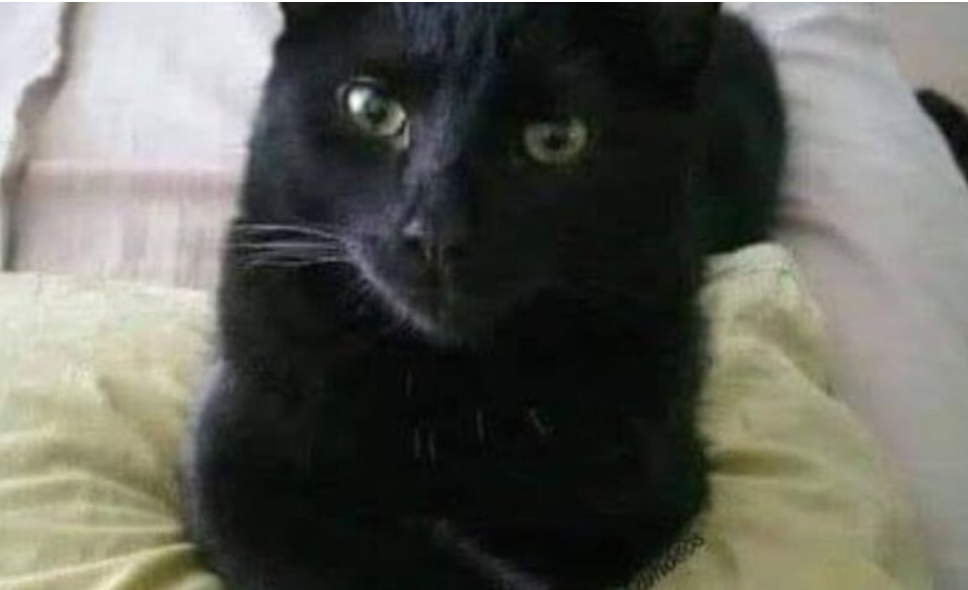
Few examples illustrate the blend of animal instinct and human superstition more clearly than the quiet approach of a black cat. For thousands of years, this ordinary moment—a dark-coated feline emerging from the shadows—has been layered with symbolism. Across eras and continents, the same simple encounter has been labeled everything from a blessing to a bad omen. Examining these shifting interpretations reveals less about the cat itself and far more about the fears, beliefs, and imagination of the people observing it.
Medieval Europe: Fear Rooted in the Unknown
Much of the negative folklore surrounding black cats traces back to medieval Europe. In a time marked by religious intensity and limited scientific understanding, unexplained events were often attributed to supernatural forces. Black cats, active at night and nearly silent in their movements, were viewed with suspicion. Many believed they were linked to witchcraft or served as mystical companions to those accused of sorcery.
This fear led to widespread persecution of cats. Ironically, history suggests that reducing urban cat populations may have worsened public health conditions. With fewer cats to control rodents, rat populations grew unchecked—contributing to the spread of disease during devastating outbreaks such as the bubonic plague. What began as superstition ultimately carried unintended ecological consequences.
Symbols of Fortune Around the World
Outside parts of medieval Europe, black cats have enjoyed a far more positive reputation. In Japan, they are often regarded as symbols of protection and good fortune. Folklore suggests they can ward off negative energy and even attract romantic prospects. This association appears in variations of the “Maneki-neko” figurine, where black versions represent safety and well-being.
In coastal regions of the United Kingdom, black cats were once cherished in sailors’ households. Families believed that keeping one at home would help safeguard loved ones at sea. On ships themselves, cats were valued not only for controlling vermin but also as symbolic protectors against storms.
Going further back, ancient Egyptians held all cats in high esteem, associating them with the goddess Bastet. A feline approaching a person was seen as a favorable sign—connected to domestic harmony, fertility, and guardianship.
A Behavioral Perspective
Modern science offers a far more grounded explanation for why a cat might walk up to someone. Coat color plays no role in a cat’s decision-making. Felines are highly attuned to body language and tend to gravitate toward individuals who appear calm and non-threatening. Interestingly, cats often approach people who ignore them, since avoiding direct eye contact signals non-aggression in feline communication.
Today, the “mystique” of black cats is largely aesthetic rather than mystical. Their sleek, dark fur makes them visually striking, especially in photography and seasonal imagery. Yet shelters frequently report that black cats are adopted less often—a pattern sometimes referred to as “Black Cat Syndrome.” Even in a scientifically informed society, subtle cultural myths can still shape behavior.
Superstition in a Fast-Moving World
The impulse to assign deeper meaning to a black cat crossing one’s path reflects a broader human tendency: we look for patterns when life feels uncertain. In times marked by global headlines, personal worries, and constant digital stimulation, symbols can seem comforting—or alarming.
When the world feels unpredictable, small events can take on exaggerated importance. A cat appearing unexpectedly may be interpreted as a sign simply because the mind seeks narrative coherence. Yet the animal itself remains unaware of these layers of meaning. It is simply responding to warmth, curiosity, or hunger.
A Quiet Reminder
Ultimately, when a black cat approaches, it is nothing more—or less—than a brief meeting between two living beings. Whether one views it as lucky, ominous, or entirely ordinary depends on personal perspective and cultural background.
In a fast-paced, screen-saturated age, such moments can serve as gentle reminders to slow down. A cat moving silently through fading light is not a messenger of fate—it is part of the natural world continuing its rhythm, unaffected by human storytelling.
Sometimes, the most grounded interpretation is also the simplest: a curious animal chose to say hello.