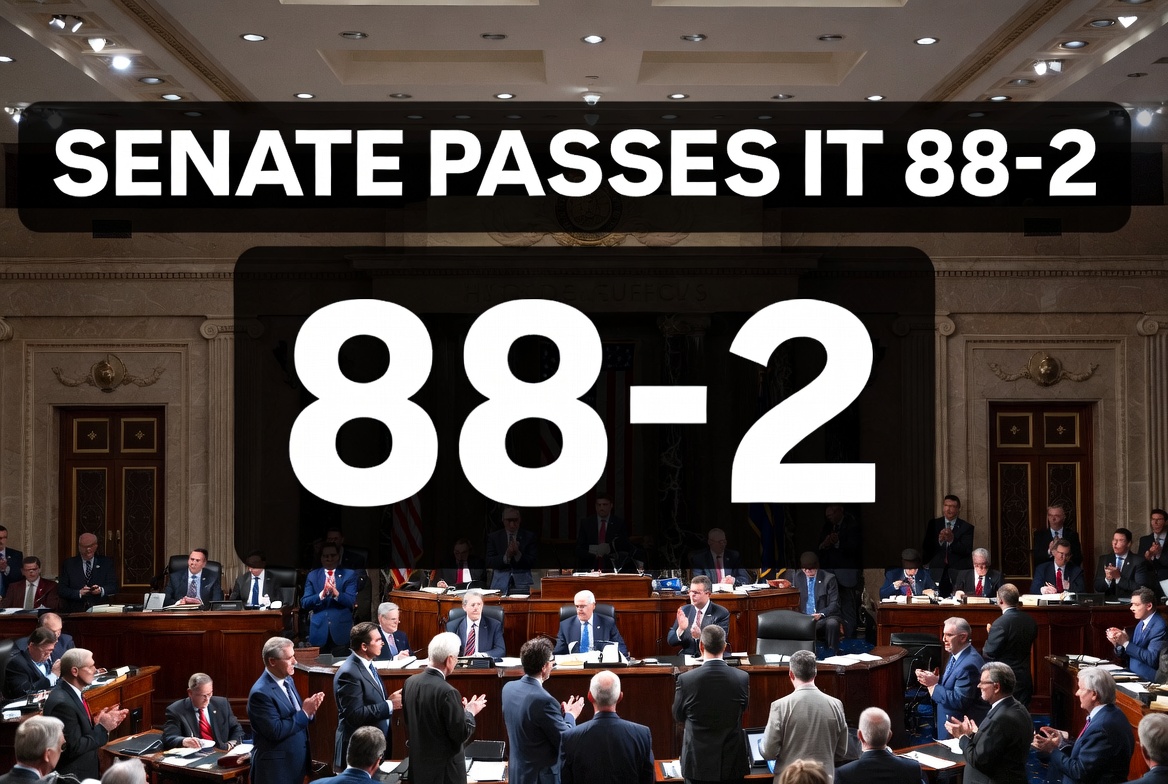
Washington rarely agrees on anything anymore.
That is why the Senate’s overwhelming bipartisan vote on a major nuclear energy bill immediately sent shockwaves through both political parties and the broader energy debate shaping America’s future. In a chamber usually defined by division and deadlock, 88 senators voted together to accelerate the next phase of nuclear power development in the United States — a result large enough to force attention from supporters and critics alike.
Now the focus shifts to Joe Biden, whose decision could help reshape the country’s long-term energy strategy for decades.
Supporters of the legislation describe it as a historic opportunity.
The bill aims to speed up approval processes for advanced nuclear reactors, reduce regulatory delays, expand incentives for emerging reactor technologies, and strengthen domestic nuclear production capacity. Advocates argue the United States cannot realistically meet aggressive climate goals without reliable large-scale energy sources capable of operating continuously regardless of weather conditions.
To climate-focused lawmakers, nuclear energy represents one of the few zero-carbon power sources capable of supporting modern electrical demand while reducing dependence on fossil fuels.
Republicans backing the bill often emphasize different priorities.
Many argue expanding nuclear energy could strengthen domestic manufacturing, reduce foreign energy dependence, create high-paying jobs, and position the United States competitively against countries like China and Russia in the global energy race.
Keep reading…