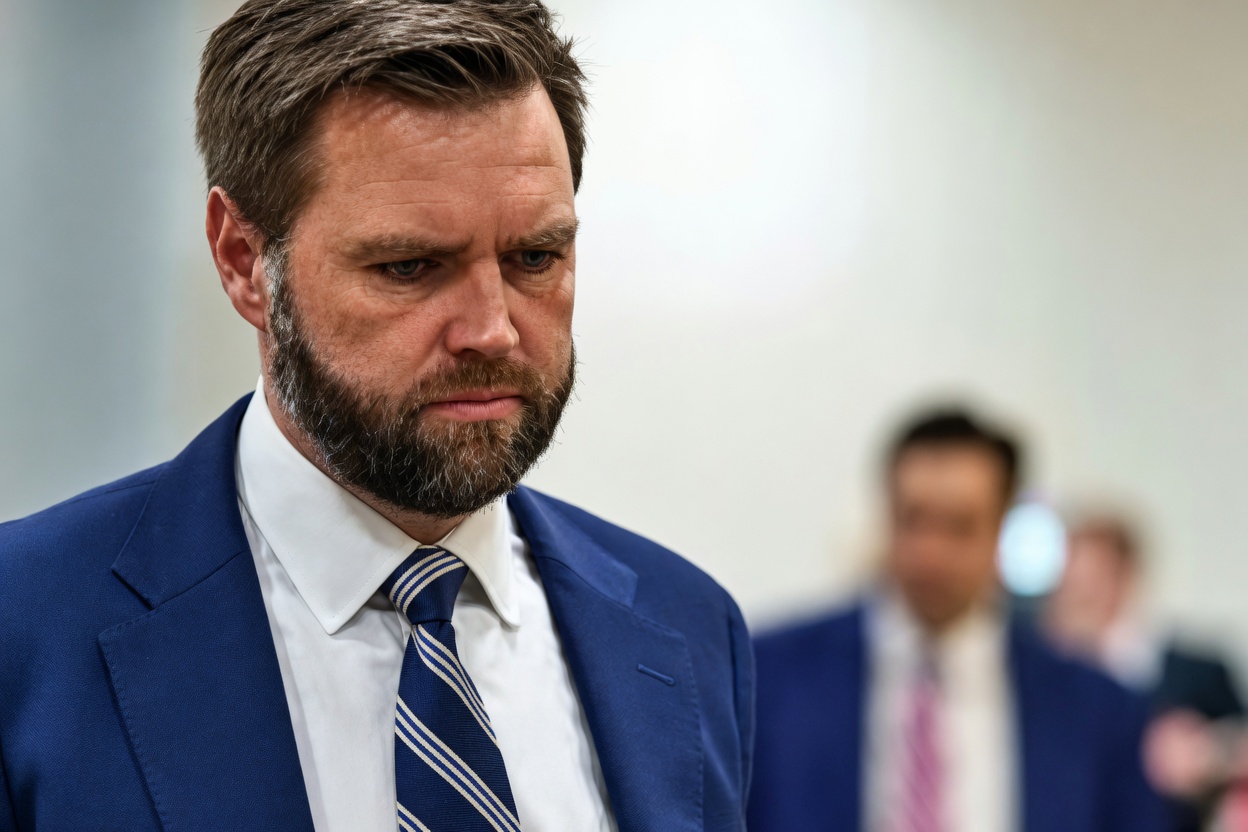
What made the clip especially notable to many observers was Vance’s political evolution.
Years earlier, before entering national office, Vance publicly criticized Trump in harsh terms during the 2016 election cycle. Since then, however, he has transformed into one of Trump’s most visible allies and defenders, aligning himself closely with the former president’s political movement and messaging.
That transformation has become part of the fascination surrounding moments like this.
Supporters view it as political growth and recognition of shared priorities. Critics see it as evidence of how dramatically modern political alliances can shift under pressure, ambition, or changing political realities.
At the same time, experts caution against treating lip-reading interpretations as definitive proof of intent or context. Without clear audio, interpretations remain speculative, even when offered by professionals. Yet the controversy itself reveals something important about the current political climate: Americans increasingly interpret even small gestures, whispers, or facial expressions through lenses shaped by deep partisan distrust.
Politics today often feels permanently amplified.
Every exchange becomes symbolic.
Every phrase becomes a potential headline.
And every ambiguous moment risks fueling narratives far larger than the actual interaction itself.
Beyond the immediate controversy, the debate surrounding the alleged comment highlights broader anxieties about the tone of American politics moving forward. Across both parties, concerns continue growing about escalating rhetoric, public hostility, and the increasing tendency to frame political opponents not simply as rivals, but as threats.
Moments like this resonate because many Americans already sense the country moving through an unusually tense political era.
Whether the alleged remark was serious, exaggerated, misinterpreted, or simply political bravado, the reaction surrounding it reflects how emotionally charged public discourse has become.
And perhaps that is the larger story.
Not only what may have been whispered in Congress, but why millions of people immediately believed it mattered so deeply.
Do you think political rhetoric in America has become more divisive in recent years? Share your thoughts respectfully in the comments below.