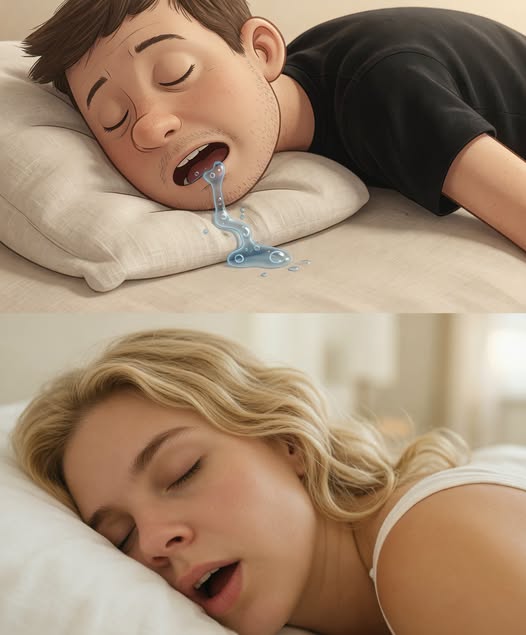
Other factors may also contribute to excessive nighttime drooling. Certain medications can increase saliva production, while dehydration, stress, hormonal changes, aging, mouth breathing, or dental problems may also play a role. In many cases, addressing the underlying cause can significantly reduce the problem.
Simple lifestyle changes may help. Staying well hydrated, treating nasal congestion, practicing good oral hygiene, and maintaining healthy sleep habits are often effective first steps. If drooling begins after starting a new medication, it’s important to speak with a healthcare provider before making any changes to your treatment.
The key message is not to panic—but not to ignore persistent changes either.
If nighttime drooling is accompanied by symptoms such as loud snoring, persistent fatigue, frequent morning headaches, pauses in breathing during sleep, difficulty swallowing, or unexplained changes in speech, scheduling a medical evaluation may be a wise decision. These symptoms don’t automatically indicate a serious condition, but they deserve professional assessment.
Health experts often remind us that the body communicates in subtle ways. A symptom that appears insignificant on its own may become much more meaningful when considered alongside other changes.
In most cases, a little drooling during sleep is simply part of normal physiology. Still, paying attention to recurring patterns can sometimes lead to earlier diagnosis of treatable conditions and better overall health.
Have you ever noticed changes in your sleep that turned out to be more important than you expected? Share your experience in the comments below, and if you found this article helpful, consider sharing it with friends or family—it may encourage someone to pay attention to a symptom they’ve been overlooking.