It’s one of the most common household habits—and one of the easiest to overlook.
You need another outlet, so you grab a power strip, plug it in, and start connecting everything nearby. A lamp, a phone charger, a coffee maker, maybe even a space heater. It seems harmless enough.
But not every appliance belongs on a power strip.
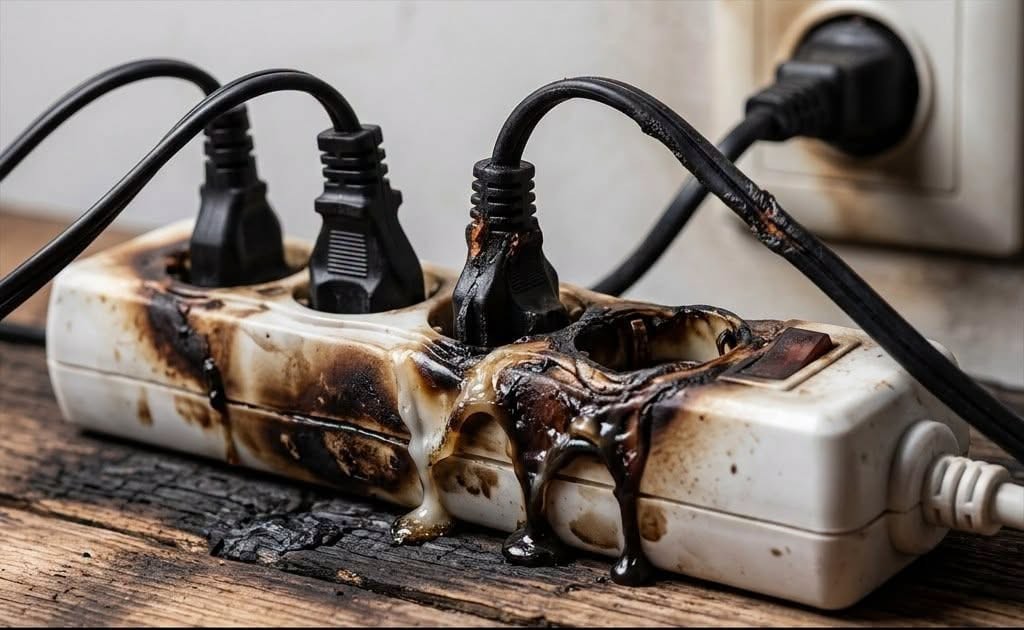
In fact, plugging certain high-powered devices into one can increase the risk of overheating, damaged equipment, or even an electrical fire. While modern power strips are designed to safely handle many everyday electronics, they have limits—and exceeding those limits can create serious problems.
Large appliances are among the biggest concerns. Refrigerators, freezers, washing machines, clothes dryers, and air conditioners often require dedicated electrical circuits because they draw significant amounts of power, especially when their motors start up. Connecting these appliances to a standard power strip can overload the strip and place unnecessary stress on your home’s electrical system.
The same caution applies to devices that generate heat.
Portable space heaters, electric grills, toaster ovens, hot plates, and many high-wattage kitchen appliances can pull more electricity than a typical power strip is designed to handle. Manufacturers frequently recommend plugging these items directly into a wall outlet instead of using extension cords or power strips.
Keep reading…