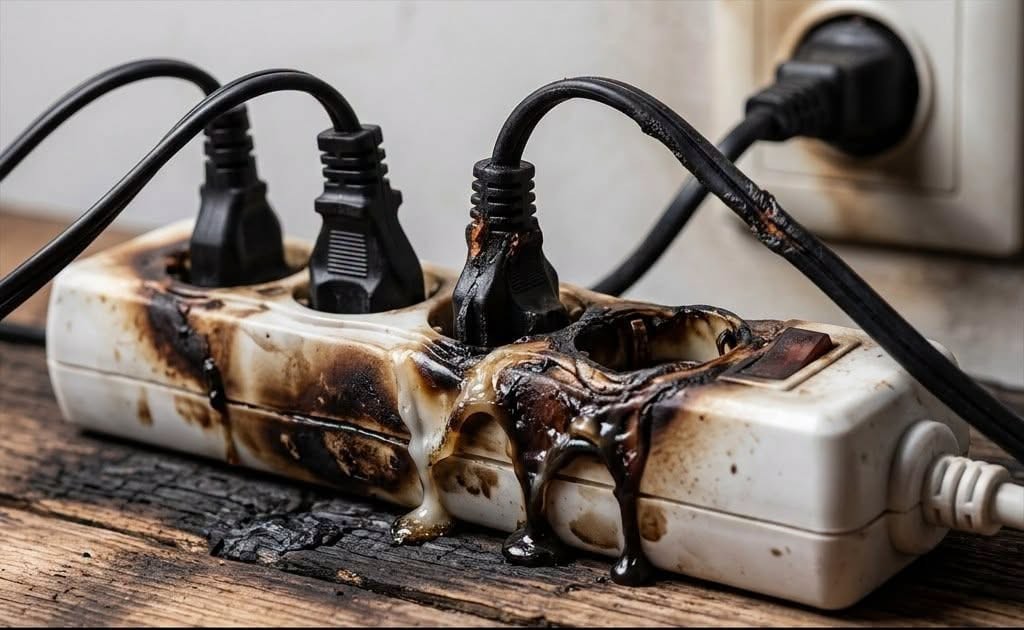
Another common mistake is “daisy-chaining” power strips—plugging one strip into another to create more outlets. Although it may seem like a convenient solution, this setup can significantly increase the risk of overloading a circuit and should be avoided.
It’s also worth thinking carefully about equipment you depend on every day.
Aquariums, medical devices, and other essential equipment may require a stable, uninterrupted power source. If a power strip fails or is accidentally switched off, the consequences could be much more serious than simply losing power to a lamp or television. For critical equipment, always follow the manufacturer’s instructions and consult a qualified electrician if you’re unsure about the safest setup.
So what is a power strip best suited for?
Generally, low-power electronics such as table lamps, phone chargers, computer monitors, televisions, printers, speakers, and similar devices are appropriate, provided the strip isn’t overloaded and is rated for the total electrical demand.
It’s also a good idea to choose power strips that carry safety certifications, include built-in overload protection, and are used exactly as instructed by the manufacturer.
Electrical safety doesn’t require complicated changes.
Often, it’s simply a matter of knowing which devices belong where.
As a general rule, if an appliance heats, cools, or uses a large motor, it’s usually safest plugged directly into a properly installed wall outlet. Power strips are better reserved for smaller electronics that draw less electricity during normal use.
A few simple choices today can help protect your home, your appliances, and your family from preventable electrical hazards.
Do you know someone whose power strip is overloaded with appliances? Share this article with them—it could help prevent a costly mistake and encourage safer habits around the home.