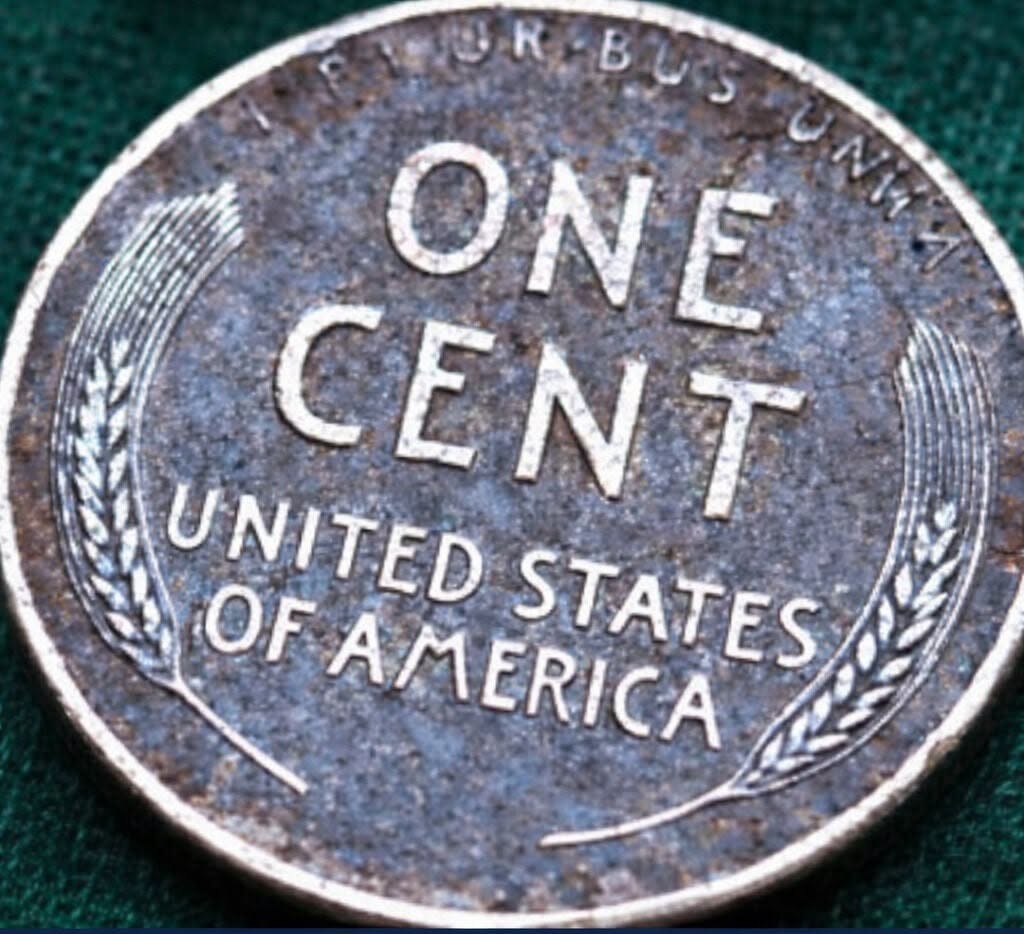
Most people don’t give a second thought to the pennies rattling around in a drawer, cup holder, or old piggy bank. They’re easy to overlook, often tossed into jars or forgotten in the bottom of a purse.
But every now and then, an ordinary-looking penny turns out to be anything but ordinary.
Among the most famous examples is the legendary 1943 bronze (or copper) Lincoln cent—a rare minting mistake that has fascinated coin collectors for decades and, in some cases, sold for astonishing sums of money.
The story begins during World War II.
As the United States increased production for the war effort, copper became a valuable resource needed for military equipment and ammunition. To conserve the metal, the U.S. Mint changed the composition of the one-cent coin in 1943, producing pennies made primarily of steel coated with zinc instead of the traditional bronze alloy.
That’s why most genuine 1943 pennies have a silver-gray appearance rather than the familiar copper color.
However, history took an unexpected turn.
Experts believe that a small number of leftover bronze planchets—the blank metal discs used to strike coins—from 1942 accidentally remained in the minting presses. As a result, a tiny number of 1943 pennies were struck using the wrong metal.
Keep reading…