That small change can make a surprisingly big difference.
You can also make the vertical space work harder by installing an additional shelf or adjustable rack, provided the cabinet is designed for it and the modification is safe. A second level can transform a tall, awkward compartment into several practical storage zones.
This space can also be useful for backup supplies.
Extra paper towels, unopened napkins, bulk pantry items, rarely used table linens, or oversized food packages can be stored there when your main cabinets are already full. Seasonal items are another natural fit: holiday serving platters, specialty dishes, or decorations that only appear a few times each year don’t need prime real estate.
One important rule: don’t turn the cabinet into a storage dump.
Because it’s high up, forgotten items can remain untouched for years. Label containers, keep frequently used supplies somewhere easier to reach, and periodically check what you’ve stored.
Also remember that heavy objects can be awkward or unsafe to retrieve from an elevated cabinet. Keep heavier items lower whenever possible, and use a stable step stool rather than balancing on chairs or countertops.
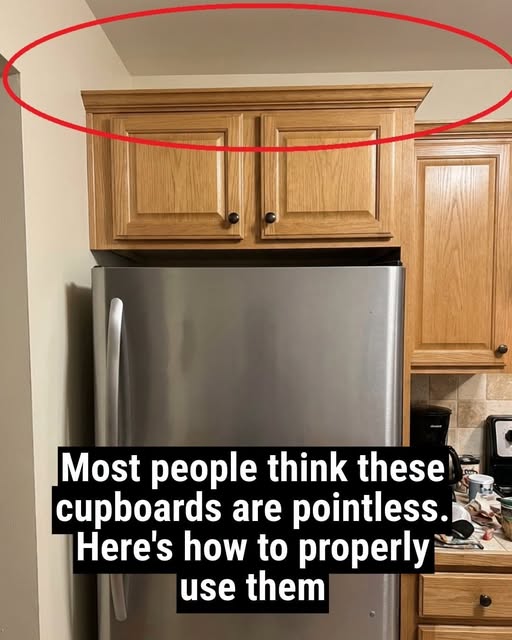
The cabinet above your refrigerator may never become the easiest space in your kitchen—but it can become one of the smartest.
With a few containers, better grouping, and a clear purpose, an overlooked cabinet can turn into valuable storage that makes the rest of the kitchen feel less crowded.
What’s hiding in the cabinet above your refrigerator right now? Tell us in the comments—and share this idea with someone who needs more kitchen storage.