What Were the Wooden Bowls Used For?
Many vintage wooden nut bowls were designed specifically for serving and cracking nuts.
Some varieties, sometimes called nut trenchers, incorporated a small metal cracker into the bowl itself. This allowed someone to crack a walnut, pecan, or similar nut without needing a separate tool.
The wooden construction also made these pieces attractive enough to leave on a dining table when they weren’t being used.
Their designs varied considerably depending on the manufacturer and period, which is one reason vintage examples can be interesting to collectors today.
And What Were the Small Metal Tools?
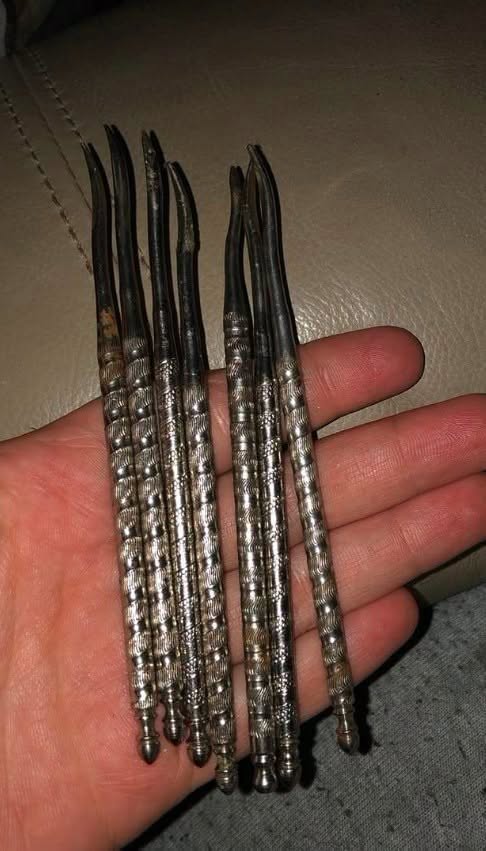
The pointed utensils found alongside the bowls are generally known as nut picks or nut forks.
Their purpose was simple: after cracking a shell, the pick could be used to remove pieces of nutmeat from narrow spaces.
Walnuts and pecans, for example, can have irregular shells that make it difficult to remove every edible piece with your fingers. A small pick made the process much easier.
Similar picks have also been used when eating shellfish such as crab and lobster.
Why Were These Sets So Popular?
Before modern convenience became such a large part of everyday life, preparing food often involved more hands-on work.
Cracking nuts at the table could become part of a family gathering, particularly during holidays and celebrations.
The bowls and tools were practical, but they could also become associated with memories of grandparents, relatives, and meals shared together.
That’s why finding a set decades later can feel like discovering more than an ordinary kitchen utensil.
More Than Just Vintage Decorations
These objects also demonstrate how older household items were often designed around specific everyday tasks.
Instead of purchasing a specialized gadget for every step, families frequently relied on durable tools that could serve one particular purpose for many years.
A wooden nut bowl could be both a serving dish and part of the preparation process, while the small picks helped make use of the entire nut.
The craftsmanship is another reason some people appreciate these pieces. Wood grain, carved details, handles, and metal fittings can vary considerably from one set to another.
Do These Items Have Any Value?
That depends on several factors.
Age alone doesn’t guarantee that a vintage kitchen item is valuable. Condition, rarity, manufacturer, materials, design, and collector interest can all affect its worth.
If someone discovers an old set among inherited belongings, it can be useful to look for markings, labels, stamps, or manufacturer’s names before attempting to clean or alter it.
Collectors and antique specialists may be able to provide additional information about an unusual piece.
A Small Reminder of Everyday History
Today, it’s easy to overlook objects that once played ordinary roles in family life.
A wooden bowl and a few small metal picks may not initially seem remarkable, but they tell a story about how people prepared and enjoyed food in earlier generations.
For my friend, discovering the set wasn’t simply about identifying an unfamiliar kitchen tool.
It was a small connection to his grandparents’ home and to a time when preparing food could be a slower, more social part of everyday life.
Sometimes the most interesting discoveries aren’t rare treasures.
They’re ordinary objects that quietly remind us how much everyday life has changed.