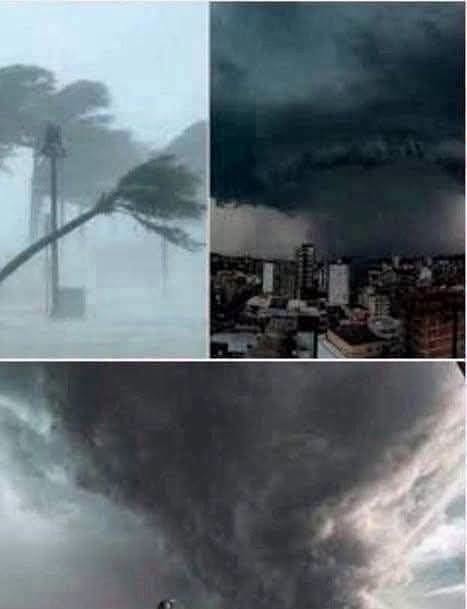
Then entire sections of the neighborhood went dark.
Power outages during severe storms can happen when trees, branches, or other debris damage electrical infrastructure.
Suddenly, ordinary conveniences disappear.
No lights.
No air conditioning.
Limited phone charging.
And sometimes no reliable internet connection.
Residents began conserving their phone batteries and checking on neighbors.
The storm had created a problem that was bigger than any single household.
The Shelter Becomes a Community
As conditions worsened, people gathered in designated shelters and safer community spaces.
The atmosphere was tense.
Children were frightened.
Older residents needed assistance.
Families waited anxiously for updates.
But something else began happening too.
People started helping one another.
Someone shared bottled water.
Another person offered a phone charger.
Volunteers checked on elderly residents.
Parents tried to keep children occupied while everyone waited for the weather to improve.
Neighbors who barely knew each other before the storm suddenly found themselves working together.
Every Update Mattered
Weather radios and official alerts became the center of attention.
People wanted to know one thing:
Was the worst over?
But severe weather can change quickly, which is why relying on official warnings is so important.
Instead of guessing from what the sky looks like outside, residents continued monitoring trusted emergency information.
The storm might sound quieter for a few minutes.
That didn’t necessarily mean it was safe to leave.
The Damage Becomes Visible
Eventually, the worst conditions began to ease.
The rain weakened.
The wind gradually settled.
And slowly, people began looking outside.
What they saw was a neighborhood transformed.
Branches covered roads.
Some homes had sustained damage.
Water pooled in low areas.
Power remained out in portions of the community.
And emergency crews faced the difficult job of assessing what had happened.
The storm had passed.
The cleanup was only beginning.
The Most Important Part Was What Happened Inside
Severe weather can expose weaknesses in roads, buildings, electrical systems, and emergency infrastructure.
But it can also reveal something less measurable.
Community.
During the storm, strangers shared resources.
Volunteers helped vulnerable residents.
Families comforted frightened children.
And people stayed connected while waiting for reliable information.
Nobody could control the weather.
Nobody could stop the wind.
But they could control how they responded.
A Reminder That Weather Can Change Fast
The biggest lesson wasn’t simply how powerful the storm became.
It was how quickly conditions changed.
A normal afternoon can become dangerous with surprisingly little warning.
That is why preparation matters long before the first raindrop falls.
Keep emergency supplies available.
Charge essential devices when severe weather is approaching.
Know where your safest indoor location is.
Follow official weather alerts.
And if authorities advise you to shelter, take that warning seriously.
Because when the sky suddenly turns dark and the wind begins roaring outside, there may be very little time left to decide what to do.
And sometimes, the safest choice is also the simplest one:
Get inside. Stay informed. And wait for the all-clear.