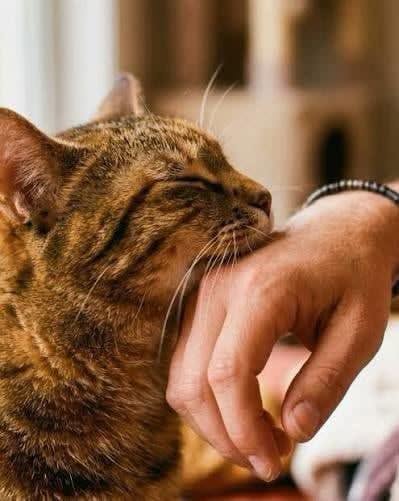
Your cat may also notice changes in your routine.
Cats are excellent observers. They can become familiar with your daily habits, movements, and patterns. If you are behaving differently, spending more time at home, or returning at an unusual time, your cat may become more attentive. Rubbing against you can be part of seeking interaction or reassurance.
And sometimes, the answer is wonderfully simple: your cat wants attention.
It might be hoping for a meal, a little playtime, a scratch behind the ears, or simply a few moments of companionship. Cats can be subtle communicators, and rubbing is one of the easiest ways for them to initiate contact.
Pay attention to the rest of your cat’s body language, too. A relaxed posture, gentle tail position, calm eyes, and willingness to stay nearby generally suggest comfort. If rubbing is accompanied by sudden changes in behavior, anxiety, or other unusual signs, however, it may be worth paying closer attention.
So the next time your cat brushes against your legs, don’t dismiss it as random.
It could be a greeting, a scent-marking ritual, a request for attention, or simply a quiet expression of trust.
Does your cat have a habit of rubbing against you? Tell us what it does in the comments—and share this with another cat lover who has wondered about the same behavior.