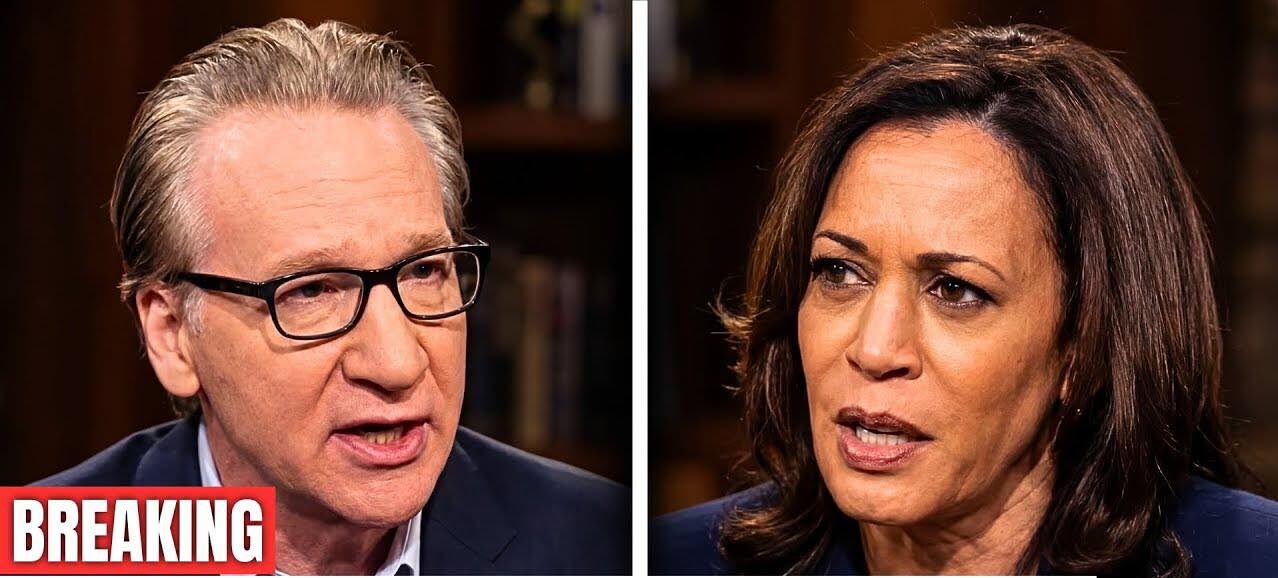
Bill Maher has reignited a fierce political debate with a sharp, unsparing critique of Vice President Kamala Harris, her messaging, and the broader strategy of the Democratic Party. His monologue went far beyond personal mockery, aiming instead at what he framed as a systemic problem: a culture of deflecting responsibility and relying on grievance over action.
Maher zeroed in on Harris’s narrative around her stalled political momentum, particularly her repeated references to a “short runway” and structural constraints that she says limited her influence. To Maher, this isn’t just an individual explanation—it’s emblematic of a party that often externalizes blame rather than examining its own decisions. He argued that voters don’t respond to narratives of helplessness, even if couched in personal or systemic adversity. Instead, they expect leaders to acknowledge mistakes, adapt strategies, and step boldly into challenging spaces.
One passage in Harris’s memoir drew Maher’s ire: a story meant to humanize her struggle, which he described as “cinematic self-pity.” To Maher, this style of storytelling prioritizes emotional validation over political clarity, making leaders appear more concerned with image than results. He contrasted that with the real world of politics, where billions in resources, institutional power, and a vast electorate mean that “helplessness” claims risk alienating the very voters the party hopes to persuade.
Maher’s critique quickly expanded from Harris to the Democratic Party as a whole. He suggested that modern messaging often prioritizes moral affirmation over political persuasion. Instead of confronting skeptical audiences in rural areas, hostile media spaces, or conservative strongholds, Democrats often retreat into safe circles, preaching to those who already agree with them. Hashtags, viral moments, and performative outrage, Maher warned, may feel satisfying internally but do little to expand influence, win votes, or build long-term coalitions.
Continue reading on next page…