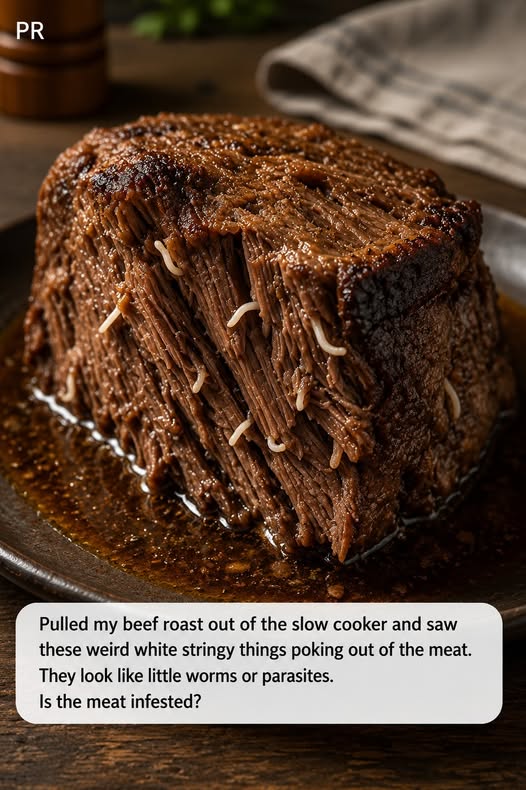
Those pale, stringy pieces that sometimes appear in slow-cooked beef often trigger concern at first glance, but in most cases they are completely normal—and even expected—parts of the meat’s natural structure.
Beef is made up not only of muscle fibers but also of connective tissue that holds everything together. This tissue contains a protein called collagen, which is especially abundant in cuts like chuck, brisket, and roast. On its own, collagen is tough and fibrous, which is why these cuts are initially firm and chewy when cooked quickly.
However, slow cooking changes everything.
When beef is cooked at low temperatures over a longer period of time, collagen begins to break down. It gradually transforms into gelatin, which gives slow-cooked meat its rich, tender, melt-in-the-mouth texture. During this process, some of the connective tissue doesn’t disappear completely—it can separate into thin, pale strands or soft, thread-like pieces that become visible between the fibers of the meat.
What may look unusual is actually a sign of proper cooking. Those soft, stringy textures are often an indicator that the roast has reached the point where tough tissue has been fully converted into tenderness and moisture.
Keep reading…