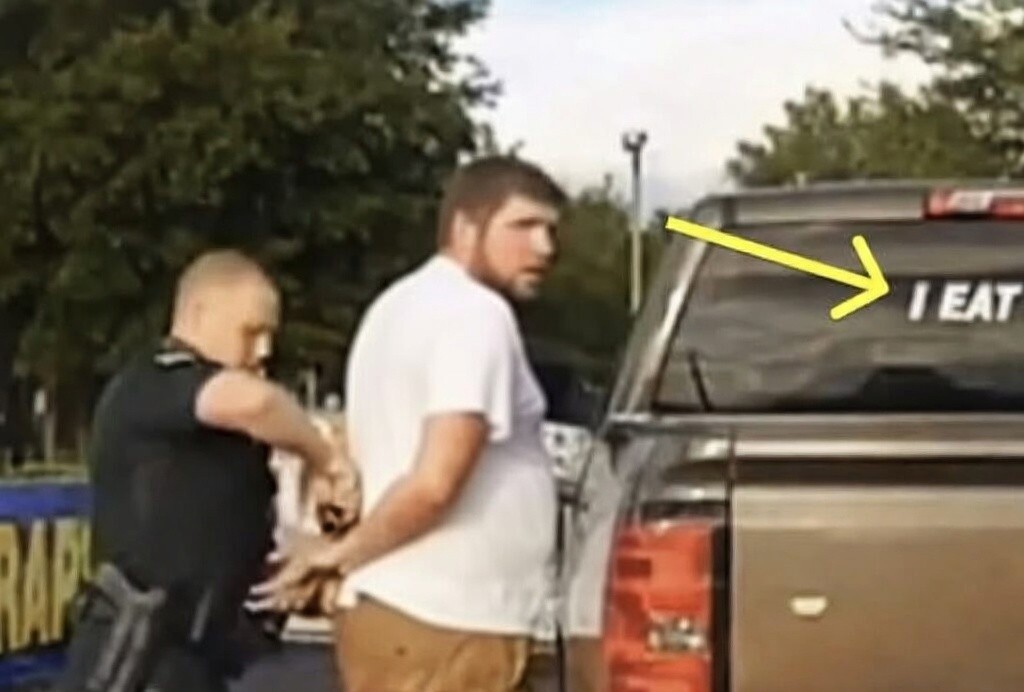
The incident involving Dillon Shane Webb in Lake City, Florida, quickly drew attention far beyond the traffic stop itself, raising broader questions about free expression, enforcement discretion, and where the line is drawn between offensive speech and unlawful conduct.
According to reports, Webb was pulled over after a sheriff’s deputy noticed a decal on his rear window containing explicit language. The deputy described the message as obscene and argued that it violated state disorderly conduct statutes. Webb, however, maintained that the sticker was a form of protected speech and refused to remove it, standing by his right to display it on his vehicle.
What began as a roadside disagreement escalated into an arrest. Webb was taken into custody, and his vehicle was searched before he was transported to jail. The situation sparked immediate debate, particularly because the underlying issue was not related to threats, violence, or criminal activity, but to the interpretation of expressive language in a public setting.
Within a short period of time, the charges were dropped. The sheriff’s office later distanced itself from the arrest, effectively closing the case without pursuing further legal action. Still, the consequences for Webb had already unfolded: time in custody, a public arrest record, and the broader attention that often follows viral incidents of this nature.
At the center of the discussion is the First Amendment and how it applies in real-world enforcement situations. While courts have consistently protected a wide range of speech—including content that many find offensive—law enforcement officers are often placed in difficult, fast-moving situations where judgment calls must be made in real time. That tension is what makes cases like this so widely debated.
Keep reading…