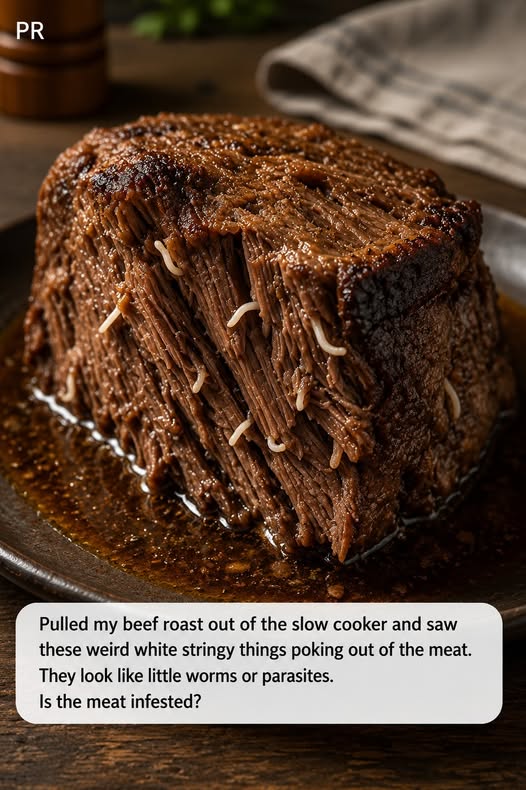
It’s also important to understand what these strands are not.
In modern food production systems, especially in countries with strict inspection standards, parasites in beef are extremely rare. When beef is handled, inspected, and cooked correctly, the risk is minimal to essentially nonexistent in everyday home cooking.
There are also clear differences between natural connective tissue and anything harmful. Cooked collagen tends to be soft, slippery, and easily pulled apart with a fork. It blends into the meat and breaks down further as you eat. By contrast, anything abnormal or foreign would typically appear structurally different—firmer, more uniform, or inconsistent with the surrounding meat fibers.
Proper cooking temperature is another key factor. When beef is cooked to recommended internal temperatures, any harmful organisms would not survive. This is why slow cooking, roasting, and braising are considered both safe and effective methods for tougher cuts of meat.
As long as the beef has been stored correctly, shows no unusual odor, and has been cooked thoroughly, those “stringy” textures are almost certainly just collagen doing exactly what it is supposed to do—breaking down and enriching the final dish.
In reality, what looks strange at first is often a sign of good technique. Slow heat is not just cooking the meat; it is transforming its structure at a microscopic level, turning toughness into tenderness and connective tissue into flavor.
If anything, those threads on your plate are a reminder that some of the best textures in food come from patience, not mystery.
If you’ve ever noticed this in your own cooking, it’s worth looking closer—you might just be seeing science at work in your kitchen.