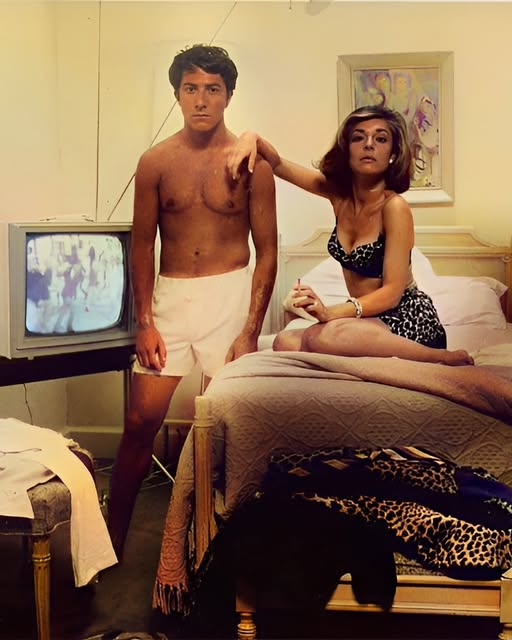
Before it became one of the most influential films of its era, The Graduate was far from a guaranteed success. It was not built on certainty or safe predictions. Instead, it was shaped by creative risk, instinct, and a willingness to challenge the established rules of Hollywood storytelling.
At the center of that risk was director Mike Nichols. At a time when studios preferred polished, traditionally attractive leading men, the obvious casting choice for the role of Benjamin Braddock was Robert Redford. He had the confidence, the charisma, and the effortless screen presence that studios believed audiences expected.
But Nichols chose a different path.
He cast Dustin Hoffman instead.
Hoffman did not fit the conventional image of a leading man. He was awkward, uncertain, and emotionally exposed in a way that Hollywood often avoided at the time. But that was exactly what made him right for the role. Benjamin Braddock was not meant to feel powerful or polished—he was meant to feel lost, uncomfortable, and deeply human.
That choice became one of the defining decisions of the film.
Rather than smoothing out those imperfections, Nichols embraced them. Hoffman’s natural unease became the emotional foundation of the story, giving the character a level of authenticity that audiences could recognize in themselves.
Continue reading on next page…